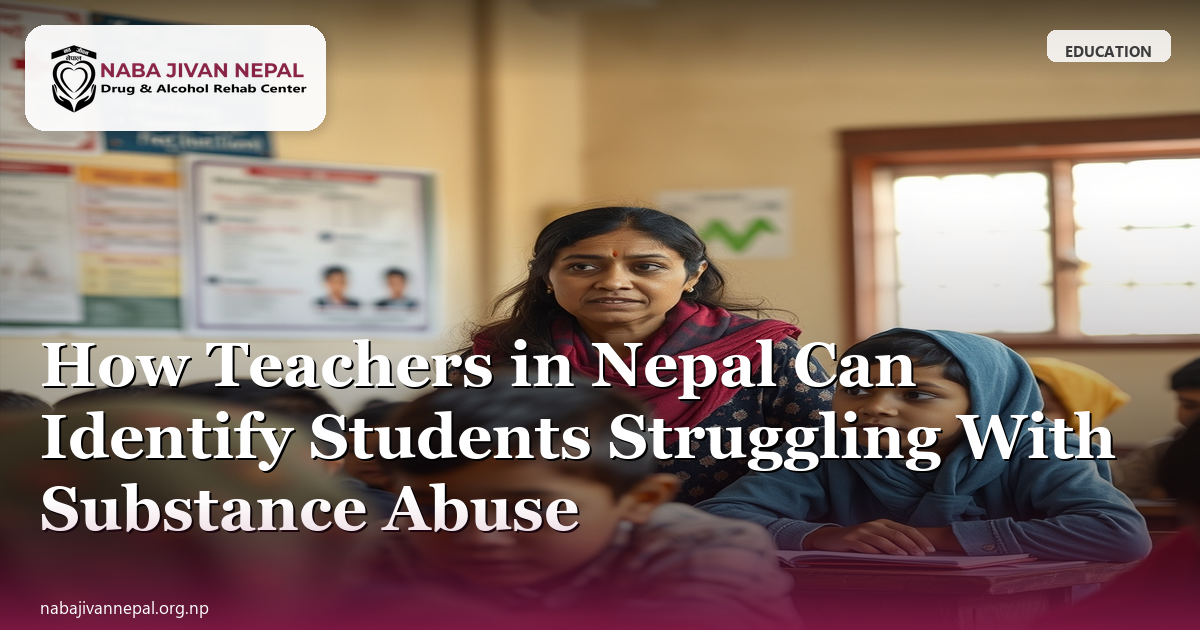
<>Teaching is a noble profession that requires patience, dedication, and a deep understanding of human behavior. In Nepal, teachers play a vital role in shaping the minds of the next generation, instilling values, and providing a solid foundation for academic success. However, with the increasing prevalence of substance abuse among Nepalese youth, teachers are facing a new challenge – identifying students struggling with drug and alcohol addiction.
Understanding the Prevalence of Substance Abuse in Nepal
Nepal has been grappling with the issue of substance abuse for decades, with a significant increase in the number of young people turning to drugs and alcohol. According to a report by the National Centre for Addiction, 15.5% of Nepalese youth aged 15-24 years have used tobacco, while 12.5% have used alcohol. The situation is more alarming in urban areas, where 30.5% of youth have used tobacco and 25.5% have used alcohol.
The reasons behind this trend are complex and multifaceted. Poverty, lack of education, and unemployment are some of the key factors contributing to substance abuse. Moreover, the easy availability of drugs and alcohol in Nepal, particularly in urban areas, has made it easier for young people to access these substances.
Teachers in Nepal must be aware of these statistics and be able to identify students who may be struggling with substance abuse. This requires a deep understanding of the signs and symptoms of addiction, as well as the ability to create a supportive and non-judgmental environment for students to open up about their struggles.
Signs and Symptoms of Substance Abuse in Students
Teachers may notice a range of signs and symptoms in students who are struggling with substance abuse. These can include:
- Changes in behavior: Students may become more withdrawn, irritable, or aggressive.
- Changes in appearance: Students may appear disheveled, have poor hygiene, or exhibit changes in their physical appearance.
- Changes in academic performance: Students may experience a decline in their academic performance, including lower grades or difficulty completing assignments.
- Changes in relationships: Students may have difficulty forming or maintaining relationships with peers or family members.
- Changes in mood: Students may exhibit mood swings, anxiety, or depression.
Teachers must be aware of these signs and symptoms and be able to identify students who may be struggling with substance abuse. This requires a deep understanding of human behavior and the ability to create a supportive and non-judgmental environment for students to open up about their struggles.
Creating a Supportive Environment for Students
Teachers can create a supportive environment for students by:
- Establishing a positive relationship: Teachers can establish a positive relationship with students by being approachable, empathetic, and non-judgmental.
- Encouraging open communication: Teachers can encourage open communication by creating a safe and supportive environment where students feel comfortable discussing their struggles.
- Providing resources: Teachers can provide resources for students, including counseling services, support groups, and educational materials.
- Following up with students: Teachers can follow up with students who may be struggling with substance abuse to provide ongoing support and guidance.
By creating a supportive environment, teachers can help students feel comfortable opening up about their struggles and seeking help when needed.
Seeking Help for Students Struggling with Substance Abuse
Teachers can seek help for students struggling with substance abuse by:
- Reaching out to school counselors: Teachers can reach out to school counselors for guidance and support in addressing student substance abuse.
- Reaching out to parents: Teachers can reach out to parents to inform them of their child’s struggles with substance abuse and seek their support and involvement.
- Reaching out to community resources: Teachers can reach out to community resources, including counseling services and support groups, to provide students with additional support and guidance.
- Reaching out to Naba Jivan Nepal: Teachers can reach out to Naba Jivan Nepal, a drug and alcohol rehabilitation center in Pokhara, for professional help and guidance in addressing student substance abuse. You can call +9779864899917 for more information.
By seeking help, teachers can provide students with the support and guidance they need to overcome their struggles with substance abuse and achieve academic success.
Developing a Substance Abuse Prevention Curriculum for Schools
As a teacher in Nepal, you play a crucial role in shaping the minds of the next generation. Developing a substance abuse prevention curriculum for your school can be an effective way to educate students about the risks and consequences of substance abuse. Here are some practical tips to help you develop a comprehensive curriculum:
* Start by identifying the specific needs of your students and school community. Consider factors such as the prevalence of substance abuse in your area, the age and demographics of your students, and the resources available to your school.
* Collaborate with other teachers, school administrators, and community members to develop a curriculum that is comprehensive, engaging, and relevant to your students’ lives.
* Incorporate a range of teaching methods, including lectures, discussions, role-playing, and interactive activities, to keep students engaged and motivated.
* Use real-life examples and case studies to illustrate the risks and consequences of substance abuse, and to promote empathy and understanding.
* Encourage students to take an active role in substance abuse prevention, through programs such as peer education, student-led clubs, and community service projects.
Building Partnerships with Community Organizations and Healthcare Providers
As a teacher in Nepal, you may not have the resources or expertise to provide comprehensive substance abuse treatment and support services to your students. However, you can build partnerships with community organizations and healthcare providers to access these services and support your students’ recovery.
* Research local organizations and healthcare providers that specialize in substance abuse treatment and support services, such as counseling, therapy, and support groups.
* Reach out to these organizations and providers to explore potential partnerships and collaborations.
* Consider hosting workshops, seminars, or training sessions to educate students, parents, and community members about substance abuse prevention and treatment.
* Encourage students to seek help from these organizations and providers, and provide them with resources and support to access these services.
Addressing Stigma and Promoting Cultural Sensitivity
Substance abuse is often stigmatized in Nepalese culture, and students who struggle with addiction may face shame, guilt, and social isolation. As a teacher, you can play a crucial role in addressing stigma and promoting cultural sensitivity.
* Educate yourself about the cultural and social factors that contribute to substance abuse in Nepal, and the ways in which stigma can exacerbate the problem.
* Create a safe and supportive learning environment that encourages students to share their experiences and feelings without fear of judgment or retribution.
* Use culturally sensitive language and materials to promote substance abuse prevention and treatment, and to avoid perpetuating negative stereotypes or stigmatizing language.
* Encourage students to take an active role in promoting cultural sensitivity and reducing stigma, through programs such as peer education and community service projects.
FAQs
- Q: What are the signs and symptoms of substance abuse in students?
A: Common signs and symptoms of substance abuse in students include changes in behavior, mood, or physical appearance, such as increased irritability, anxiety, or paranoia, or physical symptoms such as tremors, seizures, or blackouts.
- Q: How can I support a student who is struggling with substance abuse?
A: You can support a student who is struggling with substance abuse by listening to them without judgment, encouraging them to seek help, and providing them with resources and support to access treatment and support services.
- Q: What are the risks and consequences of substance abuse in Nepal?
A: The risks and consequences of substance abuse in Nepal include increased risk of HIV/AIDS, hepatitis, and other blood-borne diseases, as well as increased risk of overdose, accidents, and other health problems.
- Q: How can I develop a substance abuse prevention curriculum for my school?
A: You can develop a substance abuse prevention curriculum for your school by identifying the specific needs of your students and school community, collaborating with other teachers and community members, and incorporating a range of teaching methods and activities.
- Q: What resources are available to support students who are struggling with substance abuse?
A: Resources available to support students who are struggling with substance abuse include counseling, therapy, support groups, and other treatment and support services, as well as online resources and hotlines.
Conclusion
Substance abuse is a serious problem in Nepal, and teachers play a crucial role in preventing and addressing it. By developing a substance abuse prevention curriculum, building partnerships with community organizations and healthcare providers, addressing stigma and promoting cultural sensitivity, and providing support and resources to students who are struggling with addiction, you can help to reduce the prevalence of substance abuse in your school and community.
Call to Action
If you or someone you know is struggling with substance abuse, call Naba Jivan Nepal today at +9779864899917 for a free, confidential consultation. Our experienced and compassionate staff are here to help you every step of the way.