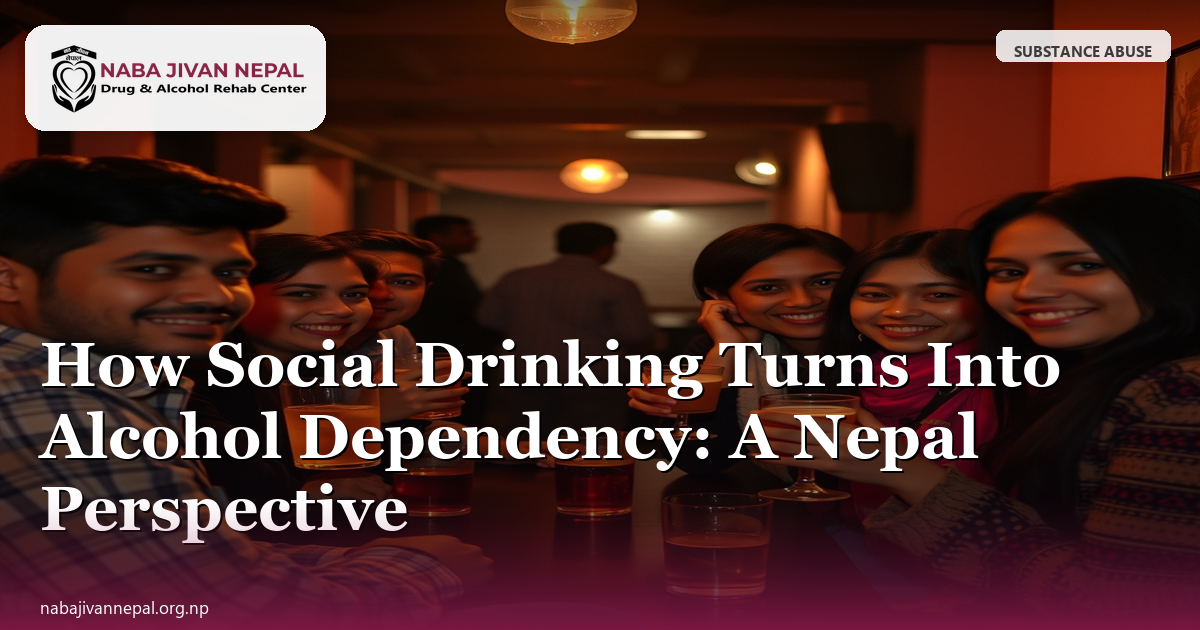
In Nepal, sharing a drink is woven into the fabric of social life. From tongba at Limbu gatherings to raksi during Newari feasts to beer at college parties in Thamel, social drinking alcohol dependency develops so gradually that most people never see the transition happening. One day you are enjoying a drink with friends on a Friday evening. Months or years later, you realize you cannot get through a single day without alcohol — and you cannot remember exactly when that changed.
If you have started wondering whether your drinking — or a loved one’s — has crossed a line, this article will help you understand when social drinking becomes a problem, what cultural factors in Nepal accelerate that transition, and what you can do about it before the damage becomes irreversible.
When Does Social Drinking Cross the Line Into Addiction?
Social drinking crosses into addiction when alcohol shifts from something you choose to enjoy into something you need to function. Key indicators include drinking alone, needing alcohol to relax or sleep, increasing your intake over time, experiencing anxiety when alcohol is unavailable, and continuing to drink despite negative consequences to your health, relationships, or work.
The transition is not a single moment — it is a spectrum. Here is how it typically progresses:
- Stage 1 — Social use: You drink at gatherings, celebrations, and social events. You can easily go days or weeks without drinking. Alcohol enhances the experience but is not necessary for it.
- Stage 2 — Regular use: Drinking becomes part of your routine. A beer after work, raksi with dinner, drinks every weekend. You still feel in control, but the frequency has increased.
- Stage 3 — Problem drinking: You drink to cope with stress, boredom, loneliness, or emotions. You sometimes drink more than you intended. You may hide how much you drink from family. Morning hangovers become regular.
- Stage 4 — Dependency: Your body needs alcohol to feel normal. Without it, you experience anxiety, tremors, sweating, or insomnia. You organize your day around drinking. Attempts to cut back fail.
- Stage 5 — Addiction: Alcohol dominates your life. Relationships suffer. Work performance declines. Health deteriorates. You continue drinking despite clear evidence of harm because stopping feels impossible.
Most people in Stages 2 and 3 do not believe they have a problem. In Nepal’s drinking culture, their behavior looks normal. This is precisely why the line is so hard to see.
What Cultural Factors in Nepal Encourage Heavy Drinking?
Nepal’s drinking culture is shaped by religious festivals where alcohol is traditional (Dashain, Tihar, Chhath), ethnic traditions centered around homemade spirits (tongba, raksi, jaand), social norms that equate drinking with hospitality and masculinity, the affordability of local alcohol, and limited awareness of alcohol’s addictive potential — all creating an environment where heavy drinking is normalized.
Festival Culture
Nepal’s festival calendar is rich and closely tied to alcohol. During Dashain, the country’s biggest festival, drinking is expected at family gatherings. Tihar celebrations involve alcohol in many households. Weddings can span multiple days with continuous drinking. Refusing alcohol at these events often invites questioning, teasing, or even offense.
Ethnic Brewing Traditions
Many Nepali ethnic groups have centuries-old traditions of brewing alcohol at home:
- Tongba (Limbu/Rai tradition) — fermented millet drink, central to Eastern Nepal hospitality
- Raksi — distilled rice or millet spirit, common across hill communities
- Jaand/Chhyang — fermented rice beer, brewed in many Newari and Tamang households
When alcohol production is a household activity and cultural heritage, the boundary between tradition and dependency becomes especially difficult to draw.
Masculinity and Drinking
Among Nepali men, heavy drinking is often seen as a sign of strength and social status. Being able to “hold your liquor” earns respect. This toxic association between alcohol and masculinity discourages men from acknowledging when their drinking has become a problem.
Affordability and Access
Locally produced alcohol is extremely affordable in Nepal. A bottle of raksi or jaand costs very little in rural and semi-urban areas. Commercial beer and spirits are also readily available at every corner shop, with limited age verification enforcement.
What Are the First Signs That Social Drinking Has Become a Problem?
The first signs include drinking more than planned, needing alcohol to relax or sleep, feeling irritable or anxious without a drink, drinking alone or in secret, neglecting responsibilities after drinking, having friends or family express concern, and finding that you think about your next drink while sober.
Ask yourself these honest questions:
- Do you drink to cope with stress, sadness, or anxiety rather than just for enjoyment?
- Have you tried to cut back but found it harder than expected?
- Do you feel defensive when someone mentions your drinking?
- Has your tolerance increased — you need more to feel the same effect?
- Do you experience any physical symptoms (shakiness, sweating, headache) when you have not had a drink for a while?
- Have you missed work, appointments, or family events because of drinking or hangovers?
- Do you sometimes drink in the morning?
If you answered yes to three or more of these questions, your drinking has likely moved beyond social use into problematic territory. This does not make you a bad person — it makes you someone who would benefit from professional guidance.
How Does Alcohol Tolerance Lead to Dependency?
Tolerance develops as the brain adapts to regular alcohol exposure by reducing its sensitivity to alcohol’s effects. You then need to drink more to achieve the same relaxation or buzz. This escalating intake causes deeper neurological adaptation, eventually leading to physical dependency where the brain cannot function normally without alcohol — and withdrawal symptoms appear when you stop.
Tolerance is the bridge between social drinking and addiction. Here is the neurological process:
- Adaptation: Your brain responds to repeated alcohol exposure by adjusting its neurotransmitter balance. It reduces GABA (the calming neurotransmitter) sensitivity and increases glutamate (the excitatory neurotransmitter) activity to compensate for alcohol’s depressant effects.
- Escalation: Because your brain has adapted, two beers no longer produce the relaxation that one beer used to provide. So you drink three, then four, then more.
- Dependence: After months or years of this escalating pattern, your brain’s chemistry has fundamentally shifted. It now needs alcohol to maintain its adjusted equilibrium. Without alcohol, the excess glutamate activity goes unchecked — producing anxiety, tremors, insomnia, and in severe cases, seizures.
This process is gradual and invisible. You do not feel your brain rewiring itself. You only notice that you “need” a drink to relax, to sleep, to feel normal. By that point, the dependency is already established.
How Can Friends and Family Intervene Early?
Early intervention works best when it comes from a place of genuine concern rather than judgment. Choose a calm, private moment to express specific observations. Use “I” statements rather than accusations. Offer concrete support — like helping find a counselor — rather than ultimatums. In Nepali culture, involving a respected elder or family figure can add weight to the conversation.
Practical Steps for Intervention
- Observe and document: Before the conversation, note specific instances — not just “you drink too much” but “I noticed you drank every evening this week and missed your son’s school event.”
- Choose the right moment: Never confront someone while they are drinking or hungover. Choose a calm, sober, private time.
- Use compassion, not blame: “I am worried about you” works better than “You have a problem.” In Nepali families, framing it as concern for their health (rather than criticism of their character) is more effective.
- Involve the right people: In Nepal’s family structure, involving a respected elder, older sibling, or trusted family friend can be more effective than a one-on-one conversation.
- Offer solutions, not just problems: “I found a center in Pokhara that helps people — would you be willing to at least call them?” is more helpful than “You need to stop drinking.”
- Set boundaries: You can love someone and refuse to enable their addiction. This means not buying alcohol for them, not covering for their absences, and not pretending everything is fine when it is not.
Taking the First Step Toward Recovery
If you recognize your own story in this article — the gradual slide from social drinking into something you cannot control — please know that this is not about willpower. Alcohol dependency is a medical condition that changes your brain chemistry. You did not choose it, but you can choose to address it.
At Naba Jivan Nepal, we help people across Nepal reclaim their lives from alcohol dependency. Our treatment programs are compassionate, confidential, and designed for the Nepali cultural context. We understand the pressures of drinking culture, and we will never shame you for what brought you here.
The best time to seek help is before you think you need it. The second-best time is right now.
Reach out to Naba Jivan Nepal now →
Frequently Asked Questions
How many drinks per day is considered alcoholism?
There is no universal number. Medical guidelines consider more than 14 drinks per week for men or 7 for women as “heavy drinking” that significantly increases health and addiction risks. However, dependency can develop at lower levels. The more important question is not how much you drink but whether you can comfortably stop — and whether drinking is causing problems in your life.
Is drinking raksi or jaand less dangerous than commercial alcohol?
No. Homemade spirits like raksi and jaand contain ethanol — the same addictive substance as commercial beer, wine, and spirits. In some ways, they may be more dangerous because their alcohol content is inconsistent and often higher than expected. Additionally, improper distillation can produce methanol, which is toxic and can cause blindness or death in extreme cases.
Can I just cut back on drinking instead of quitting completely?
For some people in the early stages of problematic drinking, controlled reduction is possible with professional guidance. However, for those who have developed physical dependency, complete abstinence is usually necessary. The brain of a dependent drinker responds differently to alcohol than a non-dependent brain — moderation is extremely difficult to maintain. A professional assessment can help determine which approach is right for your situation.
How do I celebrate Dashain and Tihar without drinking?
Many Nepalis celebrate festivals without alcohol — focus on the rituals, food, family connections, and spiritual aspects that are the true heart of these celebrations. Prepare non-alcoholic beverages to offer guests. Let close family know about your decision in advance. Have a trusted friend or family member who supports your sobriety nearby during gatherings. Remember that festivals are about community and gratitude, not about what is in your glass.
Is alcohol addiction genetic?
Genetics play a significant role — studies show that children of alcoholics are two to four times more likely to develop alcohol problems themselves. However, genetics is not destiny. Environmental factors, coping skills, social support, and personal choices all influence whether genetic vulnerability translates into actual addiction. If you have a family history of alcoholism, being aware of this risk is itself a protective factor.