
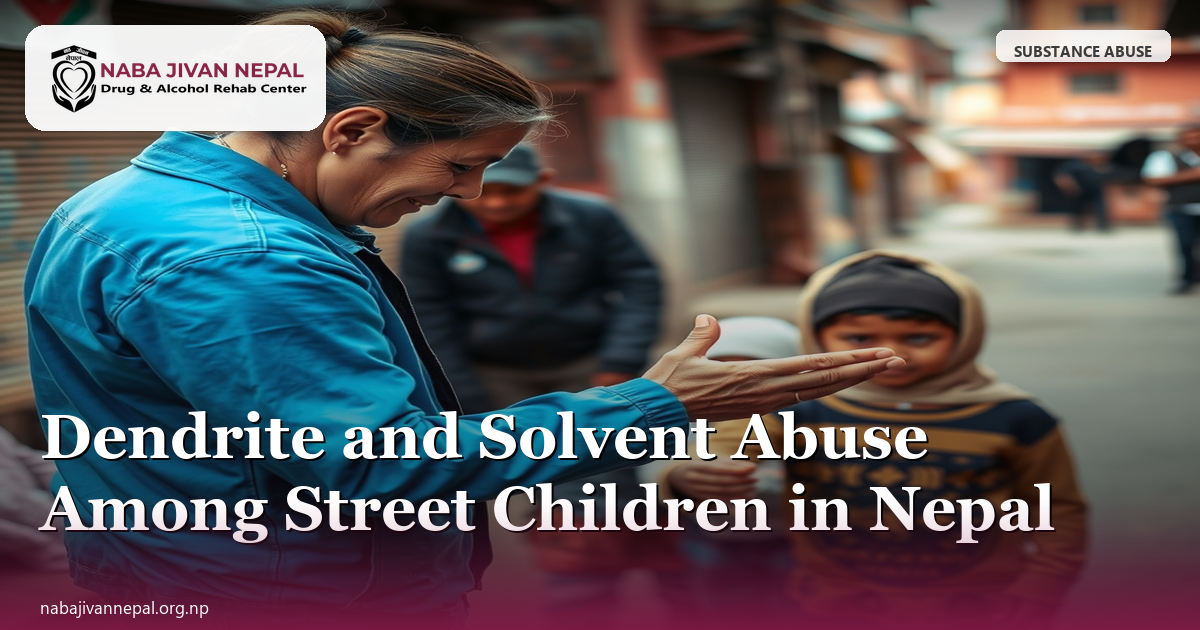
Walk through certain areas of Kathmandu’s Thamel, the bus parks of Pokhara, or the railway crossings in Terai towns, and you may notice children — some as young as eight or nine — holding rags or plastic bags to their faces, inhaling deeply. This is dendrite abuse in Nepal, and it is one of the country’s most heartbreaking and overlooked addiction crises. Dendrite, a common rubber cement adhesive, and other inhalable solvents have become the drug of choice for Nepal’s most vulnerable children — those living on the streets with no family, no shelter, and no protection.
This article explains why inhalant abuse is so common among street children, what these chemicals do to young bodies and brains, and what can be done to help.
Why Is Dendrite Abuse So Common Among Street Children in Nepal?
Dendrite abuse is common among street children because the adhesive is extremely cheap (as little as 20-30 rupees), legally available at any hardware shop without age restrictions, easy to conceal, and provides immediate relief from hunger, cold, fear, and emotional pain. For children with no other coping mechanism, solvent sniffing becomes both an escape and a survival tool.
To understand dendrite abuse, you must first understand the lives of the children who use it. Nepal has an estimated 5,000 to 20,000 street children, concentrated in Kathmandu, Pokhara, Hetauda, and Terai border towns. These children have often fled:
- Homes with domestic violence or parental addiction
- Extreme poverty in rural districts
- Physical or sexual abuse
- Orphanage situations or trafficking networks
On the streets, they face hunger, cold, exploitation, and constant fear. Dendrite — sold openly as an adhesive in hardware and craft shops — offers temporary numbness from all of it. The high comes within seconds, lasts 15 to 45 minutes, and costs almost nothing.
For these children, dendrite is not recreational — it is medicinal. It suppresses hunger pangs during days without food. It dulls the cold during winter nights sleeping on pavement. It numbs the emotional pain of abandonment and abuse. When your daily reality is this harsh, the rational calculation of a child leads to sniffing glue.
What Does Solvent Abuse Do to the Brain and Body?
Inhaling solvents like dendrite delivers toxic chemicals directly to the brain through the lungs, causing immediate intoxication followed by progressive damage to brain cells, the liver, kidneys, heart, and lungs. Chronic inhalant abuse leads to permanent cognitive impairment, hearing loss, nerve damage, and can cause “sudden sniffing death syndrome” — cardiac arrest from a single session.
How Inhalants Affect the Brain
When you inhale solvent fumes, the volatile chemicals cross from the lungs into the bloodstream and reach the brain within seconds. They dissolve the protective myelin sheath around nerve fibers — the same coating that allows electrical signals to travel efficiently between brain cells. The result:
- Immediate: Euphoria, dizziness, disorientation, slurred speech, loss of coordination — similar to alcohol intoxication but faster and more intense
- Short-term: Headaches, nausea, nosebleeds, hallucinations
- Chronic: Permanent cognitive damage, memory loss, difficulty learning, impaired judgment, personality changes
For children whose brains are still developing, this damage is particularly severe and often irreversible. A child who sniffs dendrite daily for a year may suffer lasting intellectual disability.
Physical Organ Damage
- Heart: Solvents sensitize the heart to adrenaline, creating a risk of sudden cardiac arrest — even in a young, otherwise healthy child. This is called “sudden sniffing death syndrome” and can occur during any session, including the first.
- Liver: Toluene and other chemicals in solvents are directly toxic to liver cells, causing hepatitis-like damage with chronic use.
- Kidneys: Chronic exposure can cause kidney tubular damage and eventual renal failure.
- Lungs: Repeated inhalation causes chemical burns to lung tissue, chronic bronchitis, and reduced lung capacity.
- Hearing: Solvents damage the auditory nerve, causing progressive hearing loss that is often permanent.
- Peripheral nerves: Numbness and tingling in hands and feet (peripheral neuropathy), sometimes progressing to difficulty walking.
How Can Communities Help Prevent Inhalant Abuse?
Prevention requires addressing the root causes — poverty, homelessness, and family breakdown — rather than focusing solely on the substance. Communities can help by supporting street child outreach programs, funding shelters and drop-in centers, advocating for restrictions on solvent sales to minors, creating awareness among shopkeepers, and volunteering with organizations that provide alternatives to street life.
What Works in Prevention
- Street outreach programs: Organizations like CWIN (Child Workers in Nepal), Sathsath, and others operate outreach teams that build trust with street children before connecting them to services. This relationship-first approach is essential.
- Drop-in centers: Safe spaces where street children can access food, hygiene facilities, basic medical care, and recreational activities without the requirement of entering a residential program immediately.
- Shopkeeper awareness: Community campaigns asking hardware shops to voluntarily refuse solvent sales to children. While not legally mandated, social pressure from the community can make a difference.
- Family reintegration programs: When safe and possible, reconnecting children with their families — after addressing the issues that caused them to leave — is the most sustainable solution.
- Education access: Non-formal education programs that meet street children where they are, providing literacy and skills training alongside emotional support.
What Does NOT Work
- Punishing children: Criminalizing or punishing children for solvent use drives them further from help.
- Forced rehabilitation: Forcing children into programs without building trust and addressing underlying needs leads to high dropout and return to the streets.
- Banning sales entirely: Dendrite and solvents have legitimate industrial uses. Bans are difficult to enforce and can push children toward even more dangerous alternatives.
What Are the Rehabilitation Options for Inhalant Addicts?
Rehabilitation for inhalant addiction in Nepal is available through specialized child welfare organizations, residential care homes, and treatment centers that offer detoxification, medical assessment for organ damage, psychological counseling, trauma therapy, education support, and life skills training. The approach must be child-centered, trauma-informed, and combined with a stable living environment.
Treating inhalant addiction in children differs significantly from treating adult substance abuse:
- No medication for withdrawal: Unlike opioid or alcohol addiction, there are no medications specifically for inhalant withdrawal. Treatment focuses on providing a safe environment, nutritional rehabilitation, and addressing the psychological dependency.
- Medical assessment is critical: Children who have been sniffing solvents for months or years need thorough medical evaluation — blood tests for liver and kidney function, hearing tests, neurological assessment, and cardiac screening.
- Trauma-informed care: Almost all street children who abuse solvents carry significant trauma. Treatment must address the underlying pain that drives the substance use, not just the substance use itself.
- Education and skills: Recovery must include access to education and vocational skills. Without a viable alternative life path, children return to the streets and to solvents.
- Long-term support: Recovery for these children is measured in years, not weeks. They need stable housing, consistent relationships with caring adults, and ongoing emotional support.
Why Is Inhalant Addiction Particularly Difficult to Treat?
Inhalant addiction is particularly difficult to treat because the substances are extremely cheap and available everywhere, the user population (street children) faces severe socioeconomic barriers, the addiction is entangled with survival needs, brain damage from chronic use impairs the cognitive capacity needed for recovery, and there are no pharmacological treatments to assist with withdrawal or craving reduction.
- Ubiquitous availability: You can ban a child from a dealer’s location, but you cannot ban them from every hardware shop in the city. Dendrite is everywhere.
- Poverty trap: Even if a child achieves sobriety, returning to the same street environment without housing, food security, and education almost guarantees relapse.
- Cognitive impairment: Chronic solvent abuse damages the very brain regions needed for learning, planning, impulse control, and decision-making — the exact capacities required for recovery.
- Social invisibility: Street children are often invisible to policy makers. Addiction treatment systems are designed for adults with resources, not for children with nothing.
- Peer environment: Street children live in groups where solvent use is universal. Sobriety means isolation from their only social network.
Despite these challenges, recovery is possible. Children who receive consistent care, stable housing, and patient support can and do rebuild their lives. The key is not giving up on them — even when they relapse, even when progress seems slow.
Taking the First Step Toward Recovery
Dendrite and solvent abuse among Nepal’s street children is not just an addiction issue — it is a child protection crisis that demands a compassionate response from all of us.
If you know a child who is struggling with inhalant abuse, or if you want to support efforts to help these children, please reach out. At Naba Jivan Nepal, we believe every person deserves a chance at recovery — regardless of age, background, or circumstances.
These children did not choose their circumstances. But together, we can help them choose a different path.
Contact Naba Jivan Nepal to learn how you can help →
Frequently Asked Questions
What exactly is dendrite and why do children sniff it?
Dendrite is a brand of rubber cement adhesive widely available in Nepal. It contains toluene and other volatile organic compounds that produce a brief high when inhaled. Street children use it because it is extremely cheap, legally available without restrictions, provides immediate relief from hunger, cold, and emotional pain, and its effects are fast-acting though short-lived.
Can a child die from sniffing dendrite?
Yes. Sudden sniffing death syndrome can occur during any inhalation session — even the first. The volatile chemicals sensitize the heart muscle to adrenaline, which can trigger fatal cardiac arrhythmia. Death can also result from suffocation (when inhaling from a plastic bag), aspiration of vomit during intoxication, or accidents caused by impaired judgment while intoxicated.
Is dendrite abuse illegal in Nepal?
Dendrite itself is not an illegal product — it is a commercially available adhesive with legitimate uses. Nepal does not have specific legislation criminalizing solvent inhalation or restricting the sale of adhesives to minors. Some child welfare advocates are pushing for regulations requiring age verification for solvent purchases, but no such law currently exists.
How can I help street children who are abusing solvents?
You can help by supporting organizations that work directly with street children (such as CWIN, Sathsath, and others), volunteering at shelters or drop-in centers, donating to programs that provide food, education, and medical care, advocating for policy changes, and treating these children with dignity and respect rather than fear or judgment. Even small acts of kindness and acknowledgment can make a difference in a child’s willingness to seek help.
Can brain damage from solvent abuse be reversed?
Some cognitive recovery is possible with sustained abstinence, proper nutrition, and rehabilitative support — especially in younger children whose brains retain more neuroplasticity. However, chronic, heavy solvent abuse can cause permanent damage to the brain’s white matter, resulting in lasting difficulties with memory, learning, and coordination. The earlier a child stops using and receives support, the better the chances of meaningful recovery.