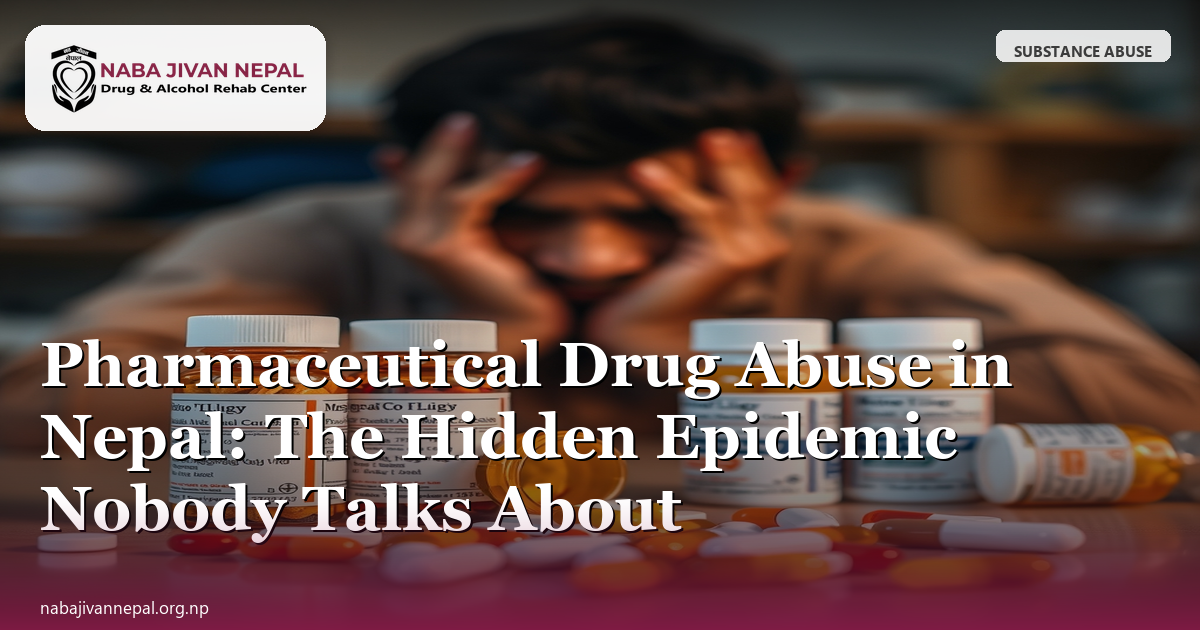
When people in Nepal think about drug addiction, they usually picture illegal substances — heroin, marijuana, or methamphetamine. But pharmaceutical drug abuse in Nepal has quietly become one of the country’s most serious public health threats, and almost nobody is talking about it. Every day, across pharmacies in Kathmandu, Pokhara, Biratnagar, and small bazaar towns, prescription medications and over-the-counter drugs are being purchased and consumed in ways they were never intended for.
The person struggling with prescription drug abuse does not look like the stereotype of an addict. They may be a college student using codeine cough syrup to get through exams, a housewife dependent on benzodiazepines to manage anxiety, or a laborer who started taking tramadol for back pain and now cannot function without it. This is what makes the epidemic so hidden — and so dangerous.
What Prescription Drugs Are Most Commonly Abused in Nepal?
The most commonly abused prescription drugs in Nepal include codeine-based cough syrups (like Phensedyl), benzodiazepines (such as diazepam and alprazolam), tramadol and other opioid painkillers, gabapentin, and sleeping pills. Many of these medications are available over the counter without a prescription due to weak pharmacy regulation.
Codeine-Based Cough Syrups
Codeine syrup abuse is one of Nepal’s most widespread pharmaceutical addiction problems. Products like Phensedyl — originally manufactured as a cough suppressant — are consumed in large quantities for their opioid effects. Users may drink one or more bottles daily. Despite being classified as a controlled substance, codeine syrups remain available in many pharmacies without proper prescription verification.
The problem is especially acute in border towns along the Nepal-India border, where these products flow freely across the open border.
Benzodiazepines
Diazepam (Valium), alprazolam (Xanax), and clonazepam are prescribed for anxiety and insomnia but are widely misused in Nepal. Many users begin taking them on a doctor’s recommendation and gradually increase their dose without medical guidance. Others obtain them directly from pharmacies. The calming effect makes them attractive to people dealing with stress, trauma, or untreated mental health conditions.
Tramadol and Opioid Painkillers
Tramadol has become a drug of choice among younger Nepalis, particularly those who cannot afford or access traditional opioids. It is relatively cheap, widely available, and produces a mild euphoric effect when taken in higher-than-prescribed doses. Stronger opioid painkillers like tapentadol are also misused, often following legitimate prescriptions for injuries or surgeries.
Other Commonly Abused Medications
- Gabapentin and pregabalin: Originally prescribed for nerve pain and epilepsy, these are increasingly misused for their sedative and euphoric effects at high doses.
- Dextromethorphan (DXM): Found in over-the-counter cough medicines, DXM at high doses produces dissociative and hallucinogenic effects. Abuse is common among teenagers who can easily purchase these products.
- Sleeping pills (zolpidem, nitrazepam): Used and misused by people struggling with insomnia, often in combination with alcohol.
Why Is Pharmaceutical Drug Abuse Difficult to Detect?
Pharmaceutical drug abuse is difficult to detect because the substances are legal, prescribed by doctors, purchased from pharmacies, and used by people who otherwise appear to live normal lives. The social stigma is lower, the physical signs develop slowly, and families often dismiss early warning signs as normal medication use.
Unlike illegal drug use, prescription drug abuse hides behind legitimacy. Consider these factors that make detection so challenging:
- Legal origin: The drugs come from a pharmacy, not a dealer. Families see medicine bottles, not suspicious paraphernalia.
- Gradual escalation: Dependency develops slowly. A person might take diazepam for months before anyone notices the dose has tripled.
- Functional addiction: Many prescription drug users continue working, studying, and maintaining relationships for months or years while their dependency deepens. They are “functioning addicts” — until they are not.
- Medical justification: Users can always explain their drug use: “My doctor prescribed it,” “I need it for my pain,” or “I cannot sleep without it.”
- Weak regulation: In Nepal, many pharmacies dispense controlled substances without prescriptions. The Department of Drug Administration has limited enforcement capacity, especially outside of major cities.
In Nepali families, where discussing mental health and substance use remains taboo, these conversations are even harder to initiate. A mother taking too many sleeping pills is seen as “stressed,” not addicted. A father who needs tramadol every morning is “managing his pain,” not dependent. By the time the family recognizes the problem, the addiction may be deeply entrenched.
What Are the Withdrawal Symptoms of Prescription Drug Addiction?
Withdrawal symptoms from prescription drug addiction vary by substance but commonly include severe anxiety, insomnia, tremors, nausea, sweating, muscle pain, seizures (with benzodiazepines and alcohol), rebound pain, depression, and intense cravings. Benzodiazepine and opioid withdrawal can be medically dangerous and should never be attempted without professional supervision.
Benzodiazepine Withdrawal
Benzodiazepine withdrawal is among the most dangerous of any drug class. Symptoms can include:
- Extreme anxiety and panic attacks
- Insomnia that may last weeks
- Tremors and muscle stiffness
- Sensory hypersensitivity (light, sound, touch feel overwhelming)
- Seizures — which can be life-threatening
- Psychotic episodes in severe cases
Benzodiazepine withdrawal should always be managed through a gradual, medically supervised tapering process. Stopping abruptly after long-term use can cause fatal seizures. This is why professional treatment is not optional — it is essential.
Opioid Painkiller Withdrawal
Tramadol and codeine withdrawal symptoms include:
- Severe body aches and muscle cramps
- Nausea, vomiting, and diarrhea
- Cold sweats and goosebumps
- Restless legs and insomnia
- Intense cravings and depression
- In the case of tramadol: risk of seizures during withdrawal
Symptoms typically peak between 24 to 72 hours after the last dose and can persist for one to two weeks. Post-acute withdrawal symptoms — including mood swings, sleep problems, and low energy — may continue for months.
Sleeping Pill Withdrawal
Discontinuing sleeping pills after prolonged use often causes severe “rebound insomnia” — sleep problems that are worse than the original condition. This creates a vicious cycle where the user feels they cannot survive without the medication, deepening the addiction.
How Is Pharmaceutical Addiction Different From Illegal Drug Addiction?
Pharmaceutical addiction differs from illegal drug addiction primarily in social perception, access, and progression. Prescription drug users often begin with legitimate medical needs, face less social stigma, maintain the illusion of control longer, and encounter fewer barriers to obtaining their substance — making the addiction easier to hide but equally destructive.
Understanding these differences matters because they affect how families, doctors, and communities respond:
- Entry point: Illegal drug use typically starts with curiosity, peer pressure, or recreational intent. Pharmaceutical addiction often begins with a genuine medical prescription — for pain after surgery, for anxiety during a difficult life period, or for insomnia. The person never intended to become addicted.
- Stigma gradient: In Nepali society, a person addicted to heroin faces harsh judgment and social exclusion. A person addicted to sleeping pills or painkillers receives sympathy or dismissal (“She just has a hard time sleeping”). This lower stigma delays help-seeking.
- Doctor involvement: Sometimes, the prescribing doctor is unknowingly part of the problem. Without proper training in addiction medicine — which many Nepali physicians lack — doctors may continue prescribing addictive medications long past the point of medical necessity.
- Withdrawal danger: Benzodiazepine withdrawal can be more medically dangerous than heroin withdrawal. Many people do not realize that stopping their “harmless” prescription medication could put their life at risk.
- Treatment approach: While the therapeutic modalities overlap (CBT, group therapy, family counseling), pharmaceutical addiction treatment often requires careful medication tapering protocols that illegal drug treatment does not.
The most dangerous misconception is that pharmaceutical addiction is “less serious” than illegal drug addiction. Addiction is addiction — regardless of whether the substance came from a pharmacy or a street dealer. The brain does not distinguish between legal and illegal sources of the same chemical effect.
Where Can You Get Help for Prescription Drug Dependency in Nepal?
Help for prescription drug dependency in Nepal is available through specialized rehabilitation centers like Naba Jivan Nepal in Pokhara, hospital-based psychiatric departments in Kathmandu (including Tribhuvan University Teaching Hospital and Patan Hospital), and community-based organizations. Treatment typically includes medically supervised detoxification, therapy, and long-term aftercare support.
Professional Rehabilitation Centers
Residential rehabilitation is often the most effective option for pharmaceutical addiction, especially when:
- The person has been using for more than six months
- Previous attempts to quit on their own have failed
- The withdrawal risk requires medical supervision
- The home environment contains triggers or enabling dynamics
At Naba Jivan Nepal, treatment for prescription drug dependency includes medically supervised tapering (gradually reducing the dose under doctor supervision), individual counseling, group therapy, family therapy, and aftercare planning. Our approach recognizes that pharmaceutical addiction often co-exists with untreated mental health conditions that need to be addressed simultaneously.
Hospital-Based Services
Several hospitals in Nepal offer psychiatric and de-addiction services:
- Tribhuvan University Teaching Hospital (TUTH) — Psychiatric outpatient clinic
- Patan Hospital — Mental health department
- Western Regional Hospital, Pokhara — Psychiatric services
What Treatment Involves
- Assessment: A thorough evaluation of which substances are being used, the duration and dose, co-occurring mental health conditions, and family dynamics.
- Medical detox: Gradual, supervised reduction of the medication — never abrupt cessation. This phase may take weeks to months for benzodiazepines.
- Therapy: CBT helps identify the triggers and thought patterns that drove the medication misuse. Group therapy reduces isolation. Family therapy repairs relationships damaged by the addiction.
- Aftercare: Ongoing counseling, support group participation, and regular check-ins to prevent relapse.
Taking the First Step Toward Recovery
If you recognize yourself or someone you love in this article, please know that pharmaceutical addiction is not a character flaw — it is a medical condition that responds to proper treatment. You did not choose to become dependent. But you can choose to seek help.
The hardest part is admitting that the medication has taken control. Everything after that becomes possible with the right support.
At Naba Jivan Nepal, we treat pharmaceutical drug dependency with the same compassion, professionalism, and evidence-based methods we bring to all forms of addiction. We understand the cultural context. We understand the shame. And we are here to help you move past it — toward a life where you are in control again.
Your recovery is possible. It starts with one conversation.
Contact Naba Jivan Nepal today for a confidential assessment. We are here for you.
Reach out to Naba Jivan Nepal now →
Frequently Asked Questions
Can you get addicted to medicine prescribed by a doctor?
Yes. Many commonly prescribed medications — including benzodiazepines, opioid painkillers, and sleeping pills — are physically addictive when taken regularly over weeks to months. Addiction can develop even when you follow your doctor’s instructions, especially if the prescription continues longer than medically necessary. If you find yourself needing higher doses, experiencing anxiety about running out, or unable to function without the medication, these are signs of dependency that warrant professional evaluation.
Is it dangerous to stop taking prescription drugs suddenly?
Yes, it can be extremely dangerous. Abruptly stopping benzodiazepines after regular use can cause seizures, which can be fatal. Sudden tramadol cessation also carries a seizure risk. Even stopping sleeping pills suddenly causes severe rebound insomnia and anxiety. All prescription drug withdrawal should be managed through a gradual tapering process under medical supervision. Never attempt to quit cold turkey on your own.
How can I tell if a family member is abusing prescription drugs?
Watch for signs such as: running out of medications faster than expected, visiting multiple doctors or pharmacies (doctor shopping), taking medication at unusual times or in unusual ways, changes in mood or personality, becoming defensive when asked about medication use, hiding pills, slurred speech, excessive drowsiness, or continuing to take medication after the original condition has resolved. In Nepal, also watch for frequent trips to pharmacies or unexplained medication purchases.
Why is pharmaceutical drug abuse increasing in Nepal?
Several factors are driving the increase: weak pharmacy regulation that allows over-the-counter sale of controlled substances, limited doctor training in addiction medicine, open borders with India allowing easy drug flow, growing mental health problems without adequate treatment infrastructure, and low public awareness that prescription medications can be addictive. Nepal’s Department of Drug Administration has limited enforcement capacity, especially outside major cities.
Does Naba Jivan Nepal treat prescription drug addiction specifically?
Yes. Naba Jivan Nepal offers specialized treatment for pharmaceutical drug dependency, including medically supervised tapering protocols for benzodiazepines and opioid painkillers, individual and group therapy, dual diagnosis treatment for co-occurring mental health conditions, family counseling, and comprehensive aftercare planning. Our medical team has specific experience managing the complexities of prescription drug withdrawal safely.