You did everything right. You supported them through treatment. You attended family therapy. You rearranged your life to create a recovery-friendly home. And then it happened — they relapsed. The devastation, anger, and hopelessness that wash over a family when a member relapses are among the most painful experiences in the recovery journey. But how you respond to a family member relapse can determine whether this setback becomes a stepping stone or a permanent return to active addiction.
This guide helps Nepali families navigate the difficult reality of relapse — what to do immediately, how to process the emotions, and when to seek re-admission to treatment.
What Should You Do First When a Family Member Relapses?
First, ensure their immediate physical safety — check for signs of overdose and seek emergency medical help if needed. Then, stay calm and avoid explosive confrontation. Express concern rather than anger. Contact their therapist or treatment center. Activate the relapse response plan you established during recovery. Do not try to manage the situation alone.
- Safety first: If opioids are involved, watch for signs of overdose — slow breathing, unresponsiveness, blue lips. Call 102 immediately if you suspect overdose.
- Do not confront while intoxicated: Wait until they are sober to have the conversation. Nothing productive happens when one person is under the influence.
- Contact the treatment team: Call their therapist, counselor, or treatment center. They have the clinical expertise to guide next steps.
- Activate your plan: If you established boundaries during recovery (“If you relapse, you re-enter treatment”), now is the time to follow through — calmly and firmly.
- Take care of yourself: Call your own support person — a therapist, an Al-Anon sponsor, a trusted friend. You need support right now too.
Does Relapse Mean Treatment Has Failed?
No. Relapse does not mean treatment has failed — it means treatment needs to be adjusted. Addiction is a chronic condition with relapse rates of 40-60%, comparable to hypertension and diabetes. Relapse is often part of the recovery process, not the end of it. What matters is how quickly the person returns to treatment and what adjustments are made to prevent future relapse.
This is one of the most important concepts for families to understand:
- A person with diabetes whose blood sugar spikes does not “fail” at managing diabetes — their treatment plan gets adjusted.
- A person with hypertension whose blood pressure rises does not “fail” — their medication gets changed.
- A person recovering from addiction who relapses has not “failed” — their recovery plan needs modification.
Common adjustments after relapse include intensified therapy, medication changes (for opioid addiction, starting or adjusting MAT), identifying the trigger that preceded the relapse, strengthening the aftercare plan, and sometimes re-entering inpatient treatment.
How Can Families Avoid Blame and Shame After a Relapse?
Avoid blame by remembering that addiction is a brain disease — not a choice or moral failing. Avoid shame by not broadcasting the relapse to extended family or community unnecessarily. Use “I” statements instead of accusations. Focus on the next step rather than dwelling on the failure. In Nepali culture, where shame (laj) is a powerful social force, protecting the family from excessive shame while maintaining accountability is a delicate but essential balance.
- Separate the person from the behavior: “You made a harmful choice” is different from “You are a failure.”
- Avoid public shame: In Nepal’s tight-knit communities, sharing relapse news widely causes social damage that actually hinders recovery. Keep the circle small.
- Process your emotions separately: Your anger is valid — express it in therapy or with your support group, not in a confrontation that shames the person into hiding their struggle.
- Do not erase their progress: If they had six months of sobriety, those six months were real and valuable. Relapse does not undo the growth that happened.
When Should You Seek Re-Admission to Rehab After Relapse?
Seek re-admission when: the relapse involves a return to daily use rather than a single slip, the person is unable to stop on their own, there is a risk of overdose, the home environment has become unsafe, outpatient adjustments have been insufficient, or the person’s mental health has deteriorated significantly alongside the substance use.
- Single slip vs. full relapse: A one-time use followed by immediate disclosure and recommitment may be manageable with outpatient support. A return to regular use requires more intensive intervention.
- Safety considerations: If the person is using opioids after a period of abstinence, the overdose risk is extremely high due to reduced tolerance. Inpatient monitoring may be necessary.
- Co-occurring crisis: If depression, suicidal ideation, or psychotic symptoms accompany the relapse, residential treatment provides the safety net needed.
How Do Families Protect Their Own Mental Health After a Loved One Relapses?
Families protect their mental health by maintaining their own support systems (therapy, support groups), setting and enforcing boundaries regardless of the relapse, refusing to take responsibility for the person’s choices, continuing their own daily routines and self-care, and accepting that they cannot control another person’s recovery. The family’s health is not secondary — it is essential.
- Continue your own therapy: A relapse is a traumatic event for the family. Professional support helps you process it without being consumed by it.
- Enforce boundaries: This is harder after relapse, not easier. But boundaries that collapse at the first test are not boundaries at all.
- Protect children: Shield children from the chaos of relapse while being age-appropriately honest about what is happening.
- Accept your limits: You can support. You can love. You can set conditions. But you cannot make someone choose sobriety. That choice is theirs alone.
- Give yourself permission to grieve: Each relapse brings a wave of grief for the person you thought was recovering and the future you were building. Let yourself feel it.
Taking the First Step Toward Recovery
Relapse is painful, but it does not have to be the end of the story. With the right response, professional support, and adjusted treatment, many people who relapse go on to achieve lasting sobriety.
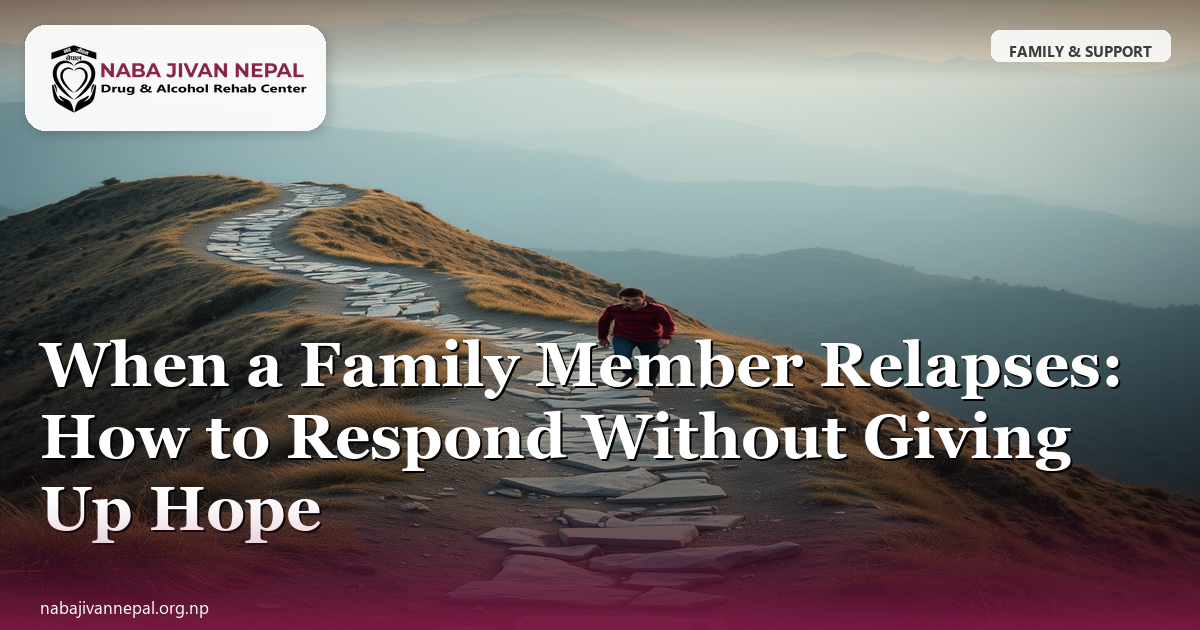
At Naba Jivan Nepal, we understand that recovery is rarely a straight line. Our programs include relapse prevention planning, re-admission pathways, and family support to help everyone affected navigate this difficult moment.
One relapse does not erase all progress. What happens next matters most.
Contact Naba Jivan Nepal for relapse support →
Frequently Asked Questions
How common is relapse in addiction recovery?
Relapse rates for substance addiction are 40-60%, comparable to other chronic conditions like diabetes (30-50%) and hypertension (50-70%). This does not mean treatment is ineffective — it means addiction is a chronic condition that requires ongoing management. Many people who achieve long-term sobriety experienced one or more relapses along the way.
Should I kick my family member out after they relapse?
This depends on the pre-established boundaries and the circumstances. If you agreed that relapse means re-entering treatment, enforce that boundary. If the person refuses treatment and their behavior makes the home unsafe, temporary separation may be necessary. The goal is not punishment but accountability. Always consult with a counselor before making this decision.
What triggers relapse most commonly?
Common relapse triggers include stress, exposure to people or places associated with past substance use, negative emotions (anger, loneliness, depression), social pressure (particularly during Nepal’s festival season), overconfidence about sobriety, discontinuing treatment or support group attendance too early, and untreated co-occurring mental health conditions.
Can the same rehab center treat someone after relapse?
Yes. Returning to the same center has advantages — the treatment team already knows the person’s history and can build on previous work while adjusting the approach. At Naba Jivan Nepal, we welcome re-admissions and view them as an opportunity to strengthen the recovery plan rather than starting from scratch.
How many relapses should a family tolerate?
There is no universal number. What matters more than the count is whether the person is genuinely engaging in treatment, taking responsibility, and making progress — even if imperfect. However, each family member has the right to define their own limits for their own wellbeing. A counselor can help you evaluate whether continued support is productive or has become enabling.