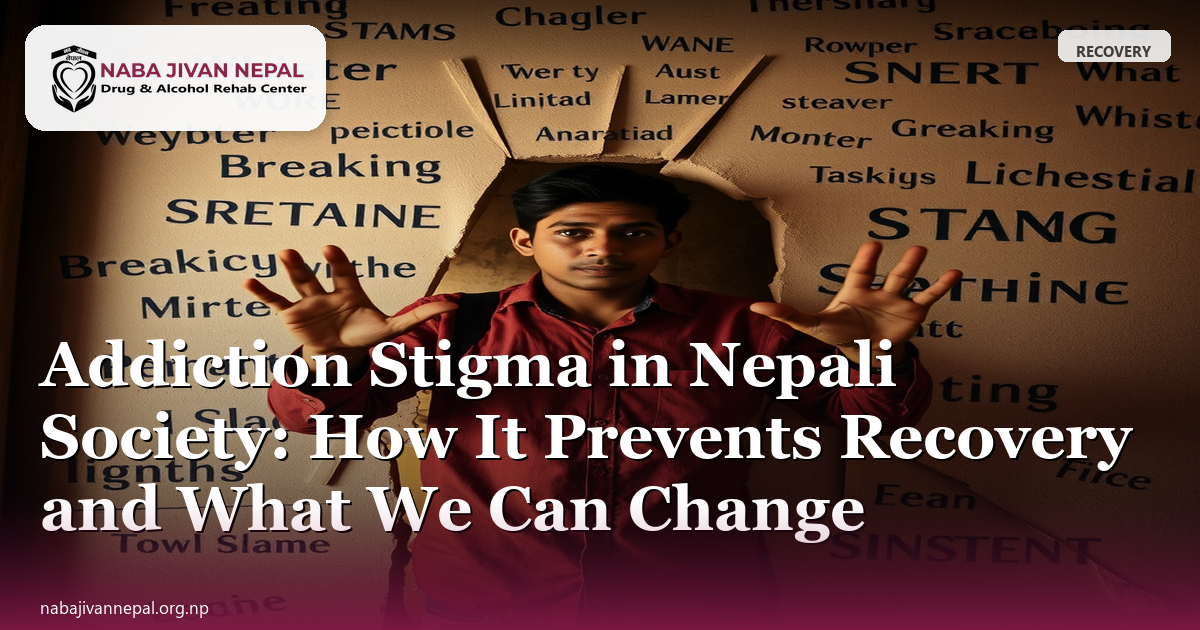
In Nepal, addiction is not just a medical condition — it is a moral verdict. A person struggling with substance abuse is not seen as someone who is ill but as someone who is weak, shameful, or morally corrupt. This addiction stigma in Nepal is one of the most powerful barriers to recovery, keeping countless individuals and families trapped in silence while a treatable condition worsens in the shadows. When the fear of social judgment is stronger than the fear of the addiction itself, people do not seek help — and lives that could have been saved are lost.
This article examines why addiction is so heavily stigmatized in Nepali society, how stigma directly prevents treatment, and what communities can do to change the narrative.
Why Is Addiction So Stigmatized in Nepali Society?
Addiction is stigmatized in Nepal because it is widely misunderstood as a moral failure or character weakness rather than a medical condition. Cultural values of family honor (izzat), social conformity, and self-discipline create an environment where admitting to addiction is seen as bringing shame on the entire family — leading to social exclusion, marriage rejection, and loss of community standing.
- Moral framing: Addiction is viewed as a choice — “He chose to drink” — rather than a brain disease. This moral lens turns a health problem into a character judgment.
- Family honor (izzat): In Nepal, individual behavior reflects on the entire family. An addicted family member is seen as a stain on the family’s reputation, discouraging disclosure and help-seeking.
- Religious interpretation: Some interpret addiction as punishment for past sins (karma) or spiritual weakness, further compounding shame.
- Limited education: Most Nepalis have never been educated about addiction as a brain disease involving neurological changes in reward, motivation, and memory circuits.
- Media portrayal: Nepali media often portrays addicts as criminals or hopeless cases rather than as people with treatable conditions.
How Does Stigma Prevent People From Seeking Treatment?
Stigma prevents treatment-seeking through fear of social rejection, concern about family reputation, worry about employment consequences, denial reinforced by shame, delay until the addiction reaches crisis stage, and avoidance of treatment facilities that might be seen by community members. In Nepal, many people die from treatable addictions simply because the stigma of seeking help felt worse than the addiction itself.
- Delayed treatment: People wait until the addiction has caused catastrophic damage — job loss, health collapse, family breakdown — before seeking help. Early intervention, which has the best outcomes, is sacrificed to preserve appearances.
- Hidden help-seeking: Families travel to distant cities for treatment to avoid being recognized. This adds cost and complexity to an already difficult process.
- Gender barriers: Women face double stigma — as addicts and as women who have “failed” in their roles. Many women with addictions never seek treatment at all.
- Professional consequences: Fear of being fired or passed over for promotion keeps working professionals from acknowledging addiction.
Do Men and Women Face Different Types of Addiction Stigma in Nepal?
Yes. Men who are addicted face stigma as “failed providers” or “irresponsible,” but male drinking is partially normalized in Nepali culture. Women who are addicted face far harsher judgment — they are labeled “characterless,” face family rejection, risk losing custody of children, and encounter significant barriers to accessing treatment in a system designed primarily for men.
- Men: Heavy drinking among men is partially tolerated (“boys will be boys”). Drug use carries harsher judgment but is still seen as a “male problem” with existing treatment pathways.
- Women: Any substance use by women is considered deeply shameful. Women addicts face abandonment by husbands, rejection by in-laws, and social ostracism. Treatment facilities in Nepal are overwhelmingly designed for men, with few programs addressing women’s specific needs.
- LGBTQ+ individuals: Face compounded stigma from both their identity and their addiction, with almost no tailored treatment resources available in Nepal.
What Role Does the Media Play in Shaping Attitudes About Addiction?
Nepal’s media largely reinforces addiction stigma by portraying addicts as criminals, using sensationalized language, focusing on dramatic downfall stories rather than recovery success, and rarely featuring medical perspectives that frame addiction as a treatable health condition. Responsible media coverage that humanizes addiction and highlights recovery could significantly shift public perception.
- Language matters: Terms like “junkie,” “drunkard,” or “lato” (Nepali slang) dehumanize people with addiction. Person-first language (“a person with addiction”) is rarely used in Nepali media.
- Missing recovery stories: Media rarely covers successful recovery. The public sees only the wreckage of addiction, never the possibility of recovery — reinforcing the belief that addiction is hopeless.
- What would help: Media featuring recovered individuals sharing their stories, medical experts explaining addiction neuroscience, and families discussing how treatment changed their lives.
How Can Communities Help Reduce Addiction Stigma in Nepal?
Communities can reduce stigma by educating themselves about addiction as a medical condition, using respectful language, sharing recovery success stories, supporting rather than shaming affected families, advocating for mental health awareness in schools and community centers, and treating addiction treatment with the same normalcy as treatment for any other chronic disease.
- Education campaigns: Community health workers and local NGOs can integrate addiction education into existing health awareness programs.
- Recovery visibility: People who have recovered and are willing to share their stories are the most powerful anti-stigma force. Their existence proves that recovery is real.
- Religious leaders: In Nepal, religious and community leaders carry enormous influence. When a priest, pandit, or community elder speaks about addiction with compassion rather than condemnation, attitudes shift.
- Workplace policies: Employers who offer employee assistance programs and treat addiction as a health condition rather than grounds for termination create safer environments for help-seeking.
- Family first: Change starts at home. When families respond to addiction with concern rather than shame, the message ripples outward.
Taking the First Step Toward Recovery
If stigma has been keeping you or someone you love from seeking help, please know this: at Naba Jivan Nepal, you will not find judgment. You will find compassion, professionalism, and a team that understands the cultural pressures you face. Our treatment is confidential, and your dignity is as important to us as your recovery.
Shame keeps people sick. Seeking help takes courage. And courage is the first step toward healing.
Contact Naba Jivan Nepal confidentially →
Frequently Asked Questions
Is addiction really a disease or just a lack of willpower?
Addiction is a chronic brain disease recognized by every major medical organization including the WHO, the American Medical Association, and Nepal’s own psychiatric community. Brain imaging shows measurable changes in areas controlling decision-making, impulse control, and reward processing. While the initial choice to use a substance is voluntary, the progression to addiction involves neurological changes that impair the ability to stop.
How can I support a friend with addiction without enabling them?
Support them with honest conversation, encouragement to seek treatment, and emotional presence. Do not provide money, cover for their absences, or protect them from consequences. The most supportive thing you can say is: “I care about you, I am worried, and I will help you find treatment — but I will not help you stay addicted.”
Will people find out if I go to rehab in Nepal?
Reputable treatment centers like Naba Jivan Nepal maintain strict confidentiality. Your treatment is protected information. While family members you choose to involve will know, no information is shared with employers, community members, or anyone else without your explicit consent.
How can I talk about addiction without using stigmatizing language?
Use person-first language: “a person with addiction” instead of “addict” or “junkie.” Say “substance use disorder” instead of “drug habit.” Say “in recovery” instead of “reformed addict.” Avoid words like “clean” (which implies “dirty” during addiction) and use “in remission” or “sober” instead. Small language changes reflect and reinforce respectful attitudes.
Are there anti-stigma campaigns happening in Nepal?
Several NGOs and mental health organizations in Nepal are working to reduce addiction stigma through community education, media engagement, and advocacy. Organizations like Transcultural Psychosocial Organization (TPO Nepal) and various rehabilitation centers conduct awareness programs. However, progress remains slow against deeply entrenched cultural beliefs. More community-level engagement and media representation of recovery success stories are needed.