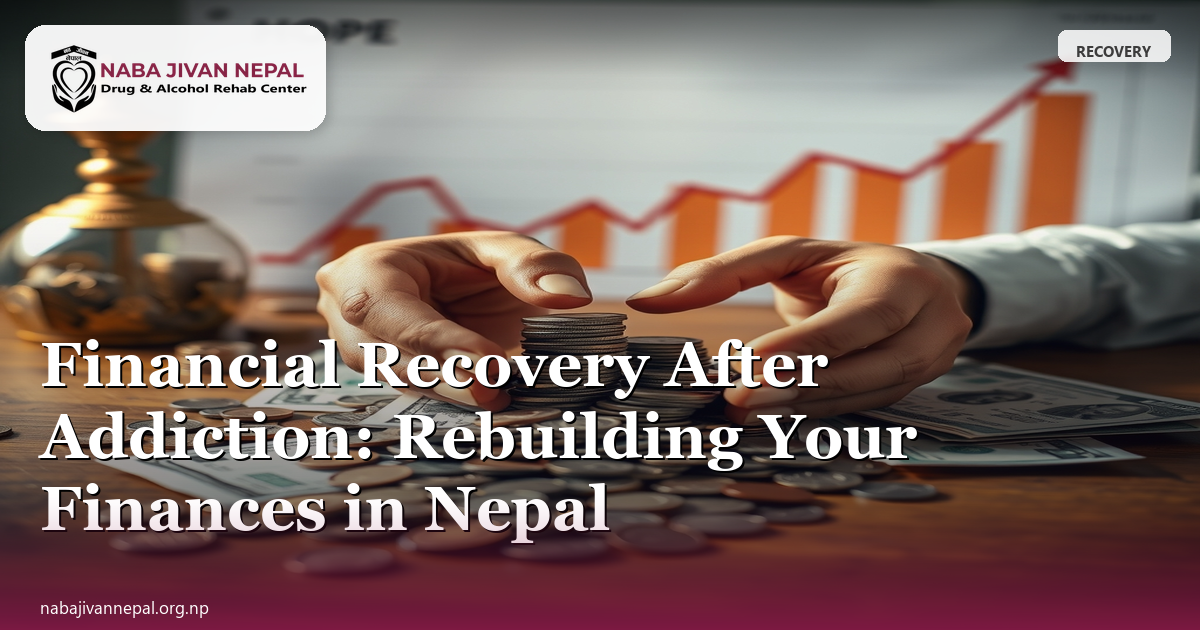
Addiction does not just steal your health and relationships — it drains your finances to the bone. By the time a person enters recovery, the financial wreckage is often staggering: depleted savings, accumulated debts, lost income from missed work, assets sold to fund the habit, and money borrowed from family and friends who may never see it again. Financial recovery after addiction is one of the most overlooked aspects of the recovery process, yet financial stress is one of the most common relapse triggers. In Nepal, where family financial networks are tightly woven and financial shame runs deep, rebuilding financial stability requires both practical strategy and emotional healing.
This article provides a practical roadmap for financial recovery — from assessing the damage to creating a sustainable budget that supports long-term sobriety.
How Much Does Addiction Typically Cost an Individual in Nepal?
The cost of addiction in Nepal varies by substance but consistently devastates household finances. A moderate alcohol habit costs NPR 50,000-150,000 annually, pharmaceutical drug dependence can cost NPR 100,000-500,000, and harder drugs like heroin or methamphetamine can cost NPR 500,000-2,000,000 or more per year. Beyond direct substance costs, indirect costs — lost wages, medical expenses, legal fees, and damaged property — often double or triple the total financial impact.
- Direct substance costs: The daily expenditure on alcohol, drugs, or pharmaceuticals accumulates relentlessly. What seems like “just a few hundred rupees a day” becomes lakhs over months and years.
- Lost income: Missed workdays, reduced productivity, job loss, and inability to pursue career advancement create a massive earnings gap. Many people in addiction work far below their earning potential — or stop working entirely.
- Medical expenses: Substance-related health problems — liver damage, injuries, infections, mental health crises — generate medical bills that strain already depleted finances.
- Debts accumulated: Loans from banks, microfinance institutions, moneylenders, and family members — often at exploitative interest rates — create a debt burden that feels insurmountable.
- Assets sold or lost: Jewelry, land, vehicles, electronics — addicted individuals often sell valuable assets at a fraction of their worth to fund immediate substance needs.
- Family financial damage: In Nepal’s interconnected family economy, one member’s addiction can devastate the entire household’s financial stability.
What Is the First Step to Rebuilding Finances After Addiction?
The first step is conducting an honest, complete financial assessment — listing all debts, all income sources, all monthly expenses, and all assets. This assessment, while often painful, transforms an overwhelming unknown into a concrete, manageable picture. Many people in recovery have avoided looking at their finances for years. The act of facing the numbers is itself a recovery milestone — it requires the same honesty that sobriety demands.
- List all debts: Every loan, every borrowed amount from family, every unpaid bill. Include interest rates and minimum payments. This is the complete picture you have been avoiding.
- Calculate your income: Your current earning capacity — whether from employment, family support, government benefits, or other sources.
- Track your expenses: For one month, record every rupee spent. This reveals patterns — often surprising ones — about where money is actually going.
- Identify assets: What do you still have? Savings (however small), property, valuables, skills that could generate income.
- Assess family impact: In Nepal, the family financial system is interconnected. Understanding how your addiction affected family finances — and how family resources might support your recovery — is essential.
This assessment is best done with support — a counselor, a trusted family member, or a financial advisor. The emotional weight of seeing the full damage is real, and having support prevents it from becoming a relapse trigger.
How Do You Create a Budget That Supports Recovery?
A recovery-supportive budget prioritizes sobriety-related expenses (therapy, medication, support group transportation) as non-negotiable needs alongside basic living costs, while eliminating spending on anything that threatens recovery. It follows the 50-30-20 adapted rule: 50% for essential needs, 30% for debt repayment and recovery expenses, and 20% for savings and rebuilding. The budget must be realistic, livable, and reviewed monthly.
Recovery Budget Priorities
- Non-negotiable recovery expenses: Therapy sessions, medication, support group transportation, and sober activities come first — before entertainment, before upgrading your phone, before anything discretionary. These are survival expenses.
- Basic needs: Food, shelter, transportation, and utilities. Keep these stable and predictable.
- Debt repayment: Start with small, consistent payments. Even NPR 500 per month toward a debt demonstrates responsibility and rebuilds credibility. Contact creditors to negotiate manageable payment plans.
- Emergency fund: Even NPR 1,000 saved per month creates a small buffer against the unexpected expenses that can trigger financial panic — and financial panic can trigger relapse.
Budget Pitfalls to Avoid
- Compensation spending: Some people in recovery replace substance spending with excessive spending on food, shopping, or entertainment — transferring the addictive pattern. Monitor this.
- Unrealistic austerity: A budget so strict that it feels punishing will fail. Allow small pleasures — tea with friends, occasional outings — that make sober life enjoyable.
- Ignoring debts: Avoidance increases interest and anxiety. Face debts systematically, even if initial payments are small.
Should You Make Financial Amends to People You Borrowed From?
Yes, but strategically and at the right time. Financial amends should be made when you are stable in recovery (typically after 6-12 months), financially able to begin repayment without jeopardizing your own basic needs, and emotionally prepared for the conversation. Start with a sincere acknowledgment of the debt and a realistic repayment plan — not a dramatic promise of immediate full repayment that you cannot sustain.
- Timing matters: Attempting financial amends in early recovery — when you are financially unstable and emotionally fragile — can create stress that threatens sobriety. Prioritize your recovery first. You cannot repay debts if you relapse.
- Honesty over promises: “I owe you NPR 50,000. I can repay NPR 2,000 per month starting next month. I know this will take time, and I am committed to making it right.” This honest, concrete offer is more meaningful than a vague promise.
- Family debts in Nepal: In Nepali culture, family financial obligations carry deep emotional weight. Repaying family members — even slowly — restores not just finances but trust and honor.
- When amends are impossible: Some debts cannot be repaid — the money is gone and you do not have it. In these cases, honest acknowledgment and changed behavior are the amends. Living soberly and responsibly demonstrates repayment in kind even when monetary repayment is impossible.
What Financial Resources Are Available for Recovering Addicts in Nepal?
Financial resources for recovering addicts in Nepal include microfinance institutions offering small business loans, government vocational training programs through CTEVT, NGO-supported skill development programs, cooperative savings groups, family-based informal lending networks, and social welfare programs for eligible individuals. While dedicated financial support for recovering addicts is limited in Nepal, creative use of existing resources can provide a foundation for financial rebuilding.
- Vocational training: The Council for Technical Education and Vocational Training (CTEVT) offers short courses in trades like electrical work, plumbing, computer skills, and hospitality — providing marketable skills that translate to employment.
- Microfinance: Several microfinance institutions in Nepal offer small loans for starting businesses. These are often more accessible than traditional bank loans and can fund small enterprises.
- Cooperative savings groups: Community-based savings cooperatives allow members to save small amounts regularly and access loans at lower interest rates than commercial lenders.
- NGO programs: Some NGOs working in addiction recovery offer vocational support, job placement assistance, and financial literacy training as part of their reintegration programs.
- Family networks: While addiction often damages family trust, many Nepali families provide financial support for recovery-related expenses when they see genuine commitment to sobriety. This requires honest communication about needs and progress.
Taking the First Step Toward Recovery
Financial recovery is not separate from addiction recovery — it is part of it. The honesty, discipline, and patience required to rebuild finances are the same qualities that sustain sobriety. And just as sobriety improves day by day, financial stability grows payment by payment, month by month.
At Naba Jivan Nepal, we understand that recovery extends beyond sobriety into every aspect of life — including finances. Our comprehensive treatment program helps you develop the life skills, vocational capabilities, and planning abilities needed to rebuild not just your sobriety but your entire life.
The same discipline that keeps you sober will rebuild your finances. Start today.
Contact Naba Jivan Nepal for comprehensive recovery support →
Frequently Asked Questions
Should I focus on recovery or finances first?
Recovery comes first — always. Without sobriety, no financial plan will work. However, completely ignoring finances creates stress that threatens recovery. The ideal approach is focusing primarily on recovery in the first 90 days while beginning basic financial assessment. After stabilizing in recovery, gradually increase focus on financial rebuilding. Think of it as recovery first, finances alongside — not either/or.
How do I handle creditors or moneylenders pressuring me during recovery?
Contact creditors proactively to explain your situation and propose a realistic repayment plan. Most creditors prefer a payment plan to no payment at all. If moneylenders are charging exploitative interest rates, seek advice from a community legal service or microfinance institution about consolidation options. If creditor pressure is creating dangerous stress levels, discuss it with your therapist — financial stress is a legitimate recovery concern that deserves clinical attention.
Is it okay to accept financial help from family during recovery?
Yes, when the help has clear conditions and boundaries. Family financial support during recovery — for treatment costs, basic living expenses, or education — is appropriate and common in Nepali families. However, the support should be structured (specific amounts for specific purposes) rather than open-ended, and there should be transparency about how the money is used. Unconditional or unsupervised financial support can become enabling rather than helping.
How long does financial recovery typically take?
Financial recovery timelines vary enormously depending on the extent of the damage, current earning capacity, and debt load. Basic financial stabilization — meeting regular expenses without crisis — typically takes 6-12 months. Meaningful debt reduction may take 2-5 years. Full financial recovery — savings, cleared debts, and financial security — can take 5-10 years. The encouraging truth is that consistent sobriety dramatically accelerates financial recovery through sustained employment and eliminated substance spending.
Can financial stress cause relapse?
Yes. Financial stress is a significant relapse trigger. The anxiety, shame, and hopelessness that financial problems create can drive a person back to substances for relief. This is why financial planning should be part of comprehensive recovery treatment, why financial pressures should be discussed openly in therapy, and why gradual, manageable financial goals are preferable to overwhelming attempts at rapid debt elimination.