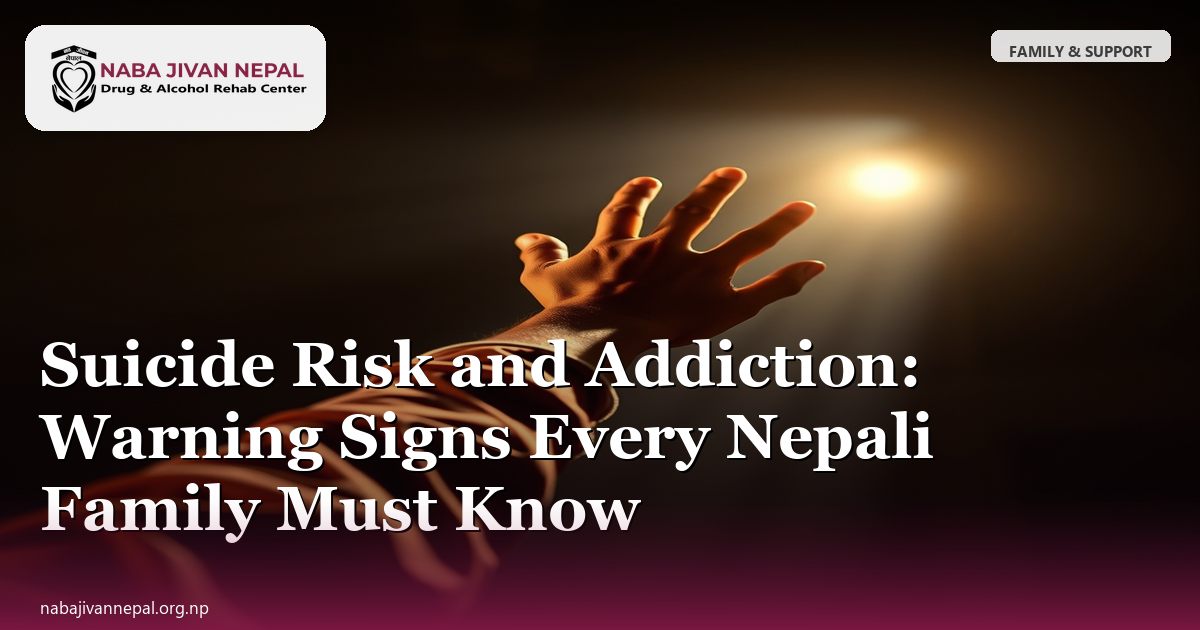
Addiction does not just destroy health and relationships — it can end lives. The connection between suicide risk and addiction is one of the most critical yet least discussed aspects of substance abuse in Nepal. People with substance use disorders are five to ten times more likely to attempt suicide than the general population. In a country where suicide is already a leading cause of death among young adults and where mental health remains deeply stigmatized, every Nepali family touched by addiction needs to understand these warning signs.
This is not an easy article to read. But if it helps one family recognize the signs and act in time, it will have served its purpose.
Why Are People With Addiction at Higher Risk for Suicide?
People with addiction face elevated suicide risk because substances impair judgment and increase impulsivity, chronic use causes or worsens depression and hopelessness, addiction destroys relationships and social support systems, withdrawal produces severe emotional pain, shame and stigma create isolation, and intoxication lowers the inhibition threshold for self-harm — turning suicidal thoughts into suicidal actions.
- Neurochemical damage: Chronic substance use depletes serotonin and dopamine — the brain chemicals that regulate mood, hope, and the will to live. This creates a biological foundation for suicidal depression.
- Impulsivity: Both intoxication and the neurological damage of chronic use impair impulse control. A person who would not act on suicidal thoughts while sober may act on them while intoxicated.
- Loss accumulation: Addiction progressively strips away everything meaningful — family, career, health, dignity. Each loss compounds hopelessness.
- Shame spiral: In Nepal’s honor-based culture, addiction shame is profound. The feeling of being beyond redemption or having disgraced one’s family can become unbearable.
- Co-occurring disorders: Over half of people with addiction have co-occurring depression, anxiety, or PTSD — each independently increasing suicide risk.
What Warning Signs Should Families Watch For?
Warning signs include: talking about being a burden to others, expressing hopelessness (“things will never get better”), giving away possessions, withdrawing from everyone including close family, sudden calmness after a period of severe depression, increased substance use or reckless behavior, searching for methods of self-harm, writing farewell messages, and statements like “everyone would be better off without me.”
Verbal Warning Signs
- “I cannot take this anymore.”
- “I am a burden on everyone.”
- “What is the point of trying?”
- “You would all be better off without me.”
- “I will not be a problem for much longer.”
- Talking about death or dying more than usual
Behavioral Warning Signs
- Giving away valued possessions without explanation
- Sudden increase in substance use — especially after a period of reduction or sobriety
- Withdrawing from everyone — even those they previously stayed connected to
- Engaging in reckless, life-threatening behavior without concern for consequences
- Researching or acquiring means of self-harm
- Settling affairs — paying off debts, writing letters, making unusual arrangements
Emotional Warning Signs
- Expressing feeling trapped — “There is no way out”
- Extreme mood swings — particularly sudden calm after severe depression (may indicate a decision has been made)
- Unbearable emotional pain — “I cannot feel this way anymore”
- Rage, desire for revenge, or feeling that they have been wronged beyond repair
How Should You Respond If a Loved One Expresses Suicidal Thoughts?
Respond by taking every expression of suicidal ideation seriously — never dismiss it as attention-seeking. Stay calm. Listen without judgment. Ask directly: “Are you thinking about hurting yourself?” Do not leave them alone. Remove access to means of self-harm (medications, sharp objects, ropes). Contact a crisis helpline or take them to the nearest emergency department. Your presence and calm response can save a life.
What TO Do
- Ask directly: “Are you thinking about killing yourself?” Research shows that asking does NOT plant the idea — it opens the door for honest conversation.
- Listen without judgment: Let them talk. Do not argue, minimize, or try to fix their feelings. “I hear you. That sounds incredibly painful.”
- Stay with them: Do not leave them alone during a crisis. Physical presence is protective.
- Remove means: Secure medications, sharp objects, ropes, and other potential means of self-harm.
- Seek professional help: Call a crisis line, contact their therapist, or take them to the nearest hospital emergency department.
- Follow up: The days after a suicidal crisis remain dangerous. Continue checking in daily.
What NOT to Do
- Do NOT say “You have so much to live for” — this dismisses their pain.
- Do NOT say “Think about what this would do to your family” — this adds guilt to an already unbearable state.
- Do NOT promise to keep their suicidal thoughts a secret — safety takes priority over confidentiality.
- Do NOT leave them alone with access to substances or means of harm.
- Do NOT assume they are “just being dramatic” — every expression of suicidal ideation deserves a serious response.
What Crisis Resources Are Available in Nepal?
Crisis resources in Nepal include: the Nepal Police emergency line (100), ambulance services (102), hospital emergency departments, the Mental Health Helpline operated by TPO Nepal, the Patan Hospital Suicide Prevention Clinic, and the TUTH Department of Psychiatry. While crisis infrastructure in Nepal is still developing, immediate help is available — and any hospital emergency department can provide crisis stabilization.
- Emergency numbers: Police: 100 | Ambulance: 102
- Patan Hospital: Operates a suicide prevention clinic and 24/7 emergency psychiatric services in Lalitpur.
- TUTH Psychiatric Emergency: Tribhuvan University Teaching Hospital provides emergency psychiatric care in Kathmandu.
- TPO Nepal Helpline: Provides telephone-based psychosocial support and referral.
- Western Regional Hospital: Emergency psychiatric services available in Pokhara.
- Naba Jivan Nepal: Our team can provide immediate crisis assessment and facilitate emergency psychiatric referral for individuals in our care or their families.
How Does Effective Addiction Treatment Reduce Suicide Risk?
Effective addiction treatment reduces suicide risk by addressing the root causes — treating co-occurring depression and anxiety, restoring neurochemical balance, rebuilding social connections, reducing shame through therapeutic processing, providing coping skills for emotional distress, and creating a support network that reduces isolation. People in sustained recovery have dramatically lower suicide rates than those with untreated addiction.
- Sobriety restores brain function: As neurotransmitter systems recover, mood regulation improves naturally, reducing the biological drive toward despair.
- Therapy builds coping skills: CBT and other therapies provide tools for managing suicidal thoughts without acting on them.
- Connection combats isolation: Group therapy and support groups create the human connections that protect against suicide.
- Purpose replaces despair: Recovery gives people a sense of purpose — rebuilding relationships, helping others, reclaiming their lives.
- Monitoring and safety: Treatment programs include regular mental health assessment, allowing clinicians to identify and respond to suicidal ideation early.
Taking the First Step Toward Recovery
If someone you love is struggling with addiction and you have noticed warning signs of suicidal thinking — or if you yourself are in pain and considering ending it — please reach out now. Not tomorrow. Now.
At Naba Jivan Nepal, we take suicide risk seriously in every person we treat. Our programs include mental health screening, crisis protocols, and the therapeutic support needed to move from despair to hope.
There is help. There is hope. And there are people who want you alive.
If you are in immediate danger, call 100 (Police) or 102 (Ambulance) now.
Contact Naba Jivan Nepal for help →
Frequently Asked Questions
Does asking someone about suicide encourage them to do it?
No. This is a persistent myth. Research consistently shows that asking directly about suicidal thoughts does not increase risk — it decreases it by giving the person permission to share their pain and seek help. Many people experiencing suicidal thoughts feel relieved when someone finally asks directly. The question itself communicates care and opens the door to intervention.
Which substances are most associated with suicide risk?
All substance use disorders increase suicide risk, but alcohol has the strongest association due to its widespread use, its depressant effects on mood, and its powerful disinhibiting effect on behavior. Opioid addiction carries high risk due to the severity of depression during withdrawal and the ease of fatal overdose. Stimulant withdrawal also produces severe depression that increases risk. Mixing substances amplifies the danger further.
Is suicide a crime in Nepal?
Nepal decriminalized attempted suicide in 2018 through the Criminal Code. Previously, attempted suicide was punishable by law, which deterred people from seeking help. While the legal barrier has been removed, social stigma around suicide remains strong. Understanding suicide as a mental health crisis rather than a criminal or moral issue is essential for prevention.
What should I do after a family member survives a suicide attempt?
Ensure they receive immediate medical attention. Do not leave them alone in the days following the attempt — the risk remains elevated. Seek emergency psychiatric evaluation. Remove access to means of self-harm. Begin conversations about treatment for both the addiction and the underlying mental health condition. Express love without judgment. And critically — do not pretend it did not happen. Silence after a suicide attempt reinforces isolation.
Can addiction treatment really reduce suicide risk?
Yes, significantly. Studies show that people who engage in comprehensive addiction treatment — particularly programs that address co-occurring mental health conditions — have substantially lower suicide rates than those with untreated addiction. Treatment restores brain chemistry, builds coping skills, reduces isolation, and provides ongoing professional monitoring. Recovery gives people reasons to live that addiction had taken away.