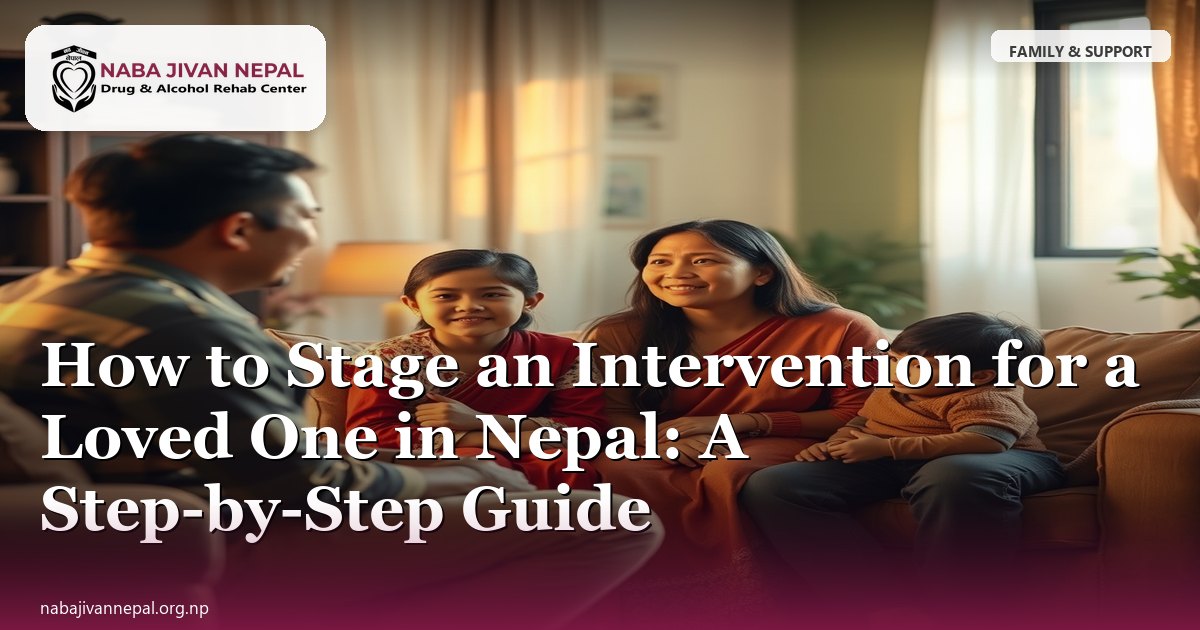
Watching someone you love destroy their life with drugs or alcohol is one of the most painful experiences a family can endure. You have tried talking, pleading, threatening, and ignoring — nothing has worked. If this is where you find yourself, a structured intervention may be the bridge between your loved one’s denial and their willingness to accept help. This intervention guide for Nepal is designed specifically for Nepali families, addressing the cultural dynamics, family structures, and social sensitivities that make interventions here unique.
An intervention is not a confrontation. It is a carefully planned, compassionate conversation that helps the person see the reality of their situation through the eyes of those who love them most.
What Is a Drug or Alcohol Intervention?
An intervention is a structured, planned conversation where family members and close friends gather to express concern about a person’s substance abuse, describe its specific impact on their lives, and present a pre-arranged treatment option. The goal is not to shame or punish, but to break through denial and motivate the person to accept professional help.
A successful intervention includes several key elements:
- Specific examples: Not “you drink too much” but “last Thursday you missed your daughter’s school performance because you were passed out.”
- Emotional impact: Each participant shares how the addiction has personally affected them — their fear, their pain, their love.
- A concrete plan: Treatment has already been researched and arranged. If the person agrees, they can enter a program immediately.
- Boundaries: Participants state what they will do if the person refuses help — not as threats, but as honest boundaries they intend to enforce.
Interventions have a high success rate when properly planned. Research shows that approximately 90% of people who undergo a professionally facilitated intervention agree to seek treatment.
How Do You Plan an Intervention for a Nepali Family Member?
Planning an intervention in Nepal requires assembling the right group of people (respected family members, close friends, possibly an elder or community figure), consulting with a professional interventionist or counselor, writing personal impact statements, researching treatment options in advance, choosing a private and culturally appropriate setting, and rehearsing the conversation to ensure it remains compassionate rather than confrontational.
Step 1: Consult a Professional
Before anything else, contact a treatment center or counselor experienced in interventions. At Naba Jivan Nepal, our team can guide you through the planning process and even participate in the intervention if needed. A professional ensures the conversation stays productive and provides clinical perspective the family may lack.
Step 2: Assemble the Team
Choose 4-6 people who are close to the person and whose opinion they respect. In Nepali families, this often includes:
- Parents or an elder family member (the respected authority figure)
- Spouse or partner
- Siblings or close cousins
- A trusted friend
- Possibly a respected community figure — a teacher, family priest, or employer
Do NOT include anyone who is actively using substances, is likely to become aggressive, or has an adversarial relationship with the person.
Step 3: Write Impact Statements
Each participant writes a personal letter describing specific instances where the addiction caused harm and expressing their love and concern. These should be written in advance and reviewed by the group to ensure the tone is consistent.
Step 4: Research Treatment Options
Have a treatment program ready to go. If the person agrees to seek help during the intervention, you want to be able to act immediately — even that same day. Delays allow denial to rebuild.
Step 5: Choose Time and Place
The intervention should happen when the person is sober, in a private setting (usually the family home), at a time when there are no pressing obligations that could be used as an excuse to leave.
What Should You Say During an Intervention?
During an intervention, speak from personal experience using “I” statements: “I feel scared when…” rather than “You always…” Share specific examples of how the addiction has affected you personally. Express love first, then concern, then the reality of consequences. Avoid blame, lectures, and emotional outbursts. End your statement with a clear expression of hope and a request for them to accept help.
Framework for Each Speaker
- Express love: “I am here because I love you and I am worried about you.”
- Share specific impact: “When [specific incident happened], I felt [specific emotion]. It affected me because [specific consequence].”
- Avoid generalizations: Instead of “you always ruin everything,” say “last month when you came home intoxicated and yelled at the children, they were frightened and could not sleep.”
- State your boundary: “If you choose not to accept help, I will [specific boundary] — not because I do not love you, but because I cannot continue enabling what is hurting you.”
- End with hope: “I believe you can recover. I have seen who you are without this substance. I want that person back.”
Cultural Considerations for Nepal
- In Nepali culture, direct confrontation can feel deeply disrespectful, especially from younger family members to elders. Frame everything as concern, not criticism.
- If intervening with a parent, having a respected elder initiate the conversation can ease the cultural tension.
- Involve the person’s sense of duty to family — a powerful motivator in Nepali culture. “Your children need their father healthy” can be more effective than any medical argument.
What Mistakes Should Families Avoid During an Intervention?
Common mistakes include staging the intervention while the person is intoxicated, using anger or blame instead of compassion, making empty threats you will not follow through on, including too many people or the wrong people, failing to have a treatment plan ready, giving up if the first attempt does not succeed, and allowing the intervention to devolve into a family argument.
- Do not ambush: While the intervention is a surprise, it should not feel like an attack. The tone must be loving from the first word.
- Do not threaten without follow-through: If you state a boundary (“I will not give you money anymore”), you must mean it. Empty threats destroy credibility and teach the person that your words do not matter.
- Do not bring up old grudges: This is not the time to settle scores. Stay focused on the addiction and its current impact.
- Do not argue or debate: The person may become defensive, deny the problem, or try to redirect the conversation. Stay calm and return to your prepared statements.
- Do not enable afterward: If the person refuses help, you must follow through on your stated boundaries. Continuing to enable — giving money, making excuses, covering for them — reinforces the status quo.
- Do not give up after one attempt: Many successful interventions are not the first attempt. Even if the person refuses initially, the seed has been planted.
What Happens After a Successful Intervention?
After a successful intervention, the person ideally enters a pre-arranged treatment program immediately — that same day if possible. The family begins their own healing process, often through family therapy and support groups. The transition from intervention to treatment must be seamless to prevent the window of willingness from closing.
Immediate Steps
- Transport to treatment: Have a bag packed and transportation arranged. The less time between agreement and arrival at the treatment center, the better.
- Handle logistics: The family handles work notifications, childcare, bill payments, and other responsibilities so the person can focus entirely on treatment.
- Communicate with the treatment team: Share relevant information with the treatment center — what substances are being used, medical history, family dynamics.
Family Recovery Begins
The intervention is not the end — it is the beginning. While your loved one is in treatment, the family should:
- Begin family therapy to address the dynamics that developed around the addiction
- Join a support group for families of addicts (Al-Anon or Nar-Anon, available in Nepal)
- Work with a counselor to establish healthy boundaries for when the person returns home
- Address any codependency patterns that may have developed
Taking the First Step Toward Recovery
If you are reading this, you have already taken a courageous step. You are looking for answers because you love someone who is struggling, and you are not willing to watch silently any longer.
At Naba Jivan Nepal, we help families plan and conduct effective interventions. Our team understands Nepali family dynamics, the cultural sensitivities involved, and the practical steps needed to move from a conversation to a treatment plan.
You cannot force someone into recovery. But you can create the conditions that make choosing recovery possible.
Contact Naba Jivan Nepal for intervention guidance →
Frequently Asked Questions
Will an intervention make my family member angry?
Initial defensiveness is common and expected. Many people react with anger, denial, or attempts to leave when first confronted. However, when the intervention is conducted with genuine love and specific examples rather than blame, most people move past the initial reaction. The key is to remain calm, compassionate, and united as a group regardless of the initial response.
What if the person refuses to go to treatment?
If the person refuses, follow through on the boundaries you stated during the intervention. This is difficult but essential. Continued enabling after a refused intervention sends the message that nothing will change. Many people who refuse initially come around within days or weeks — especially when they experience the consequences of the boundaries their family has set.
Should children be present at an intervention?
This depends on the child’s age and emotional maturity. Teenagers who have been directly affected by the addiction can be powerful participants when properly prepared. Young children should generally not be present for the intervention itself, though their impact can be referenced by adult speakers. A professional interventionist can advise on whether including older children is appropriate in your specific situation.
How much does a professional intervention cost in Nepal?
Costs vary depending on whether you use a private interventionist or receive guidance from a treatment center. Many rehabilitation centers, including Naba Jivan Nepal, provide intervention planning support as part of their intake process at no additional cost. The investment in a properly conducted intervention is small compared to the ongoing costs of untreated addiction — medical bills, lost income, family breakdown, and potential loss of life.
Can we do an intervention without professional help?
While possible, it is not recommended. Interventions without professional guidance are more likely to devolve into arguments, cause emotional damage, or push the person further from treatment. A professional provides structure, mediates conflict, and ensures the conversation stays productive. At minimum, consult with a treatment center for guidance on planning and approach before attempting an intervention on your own.