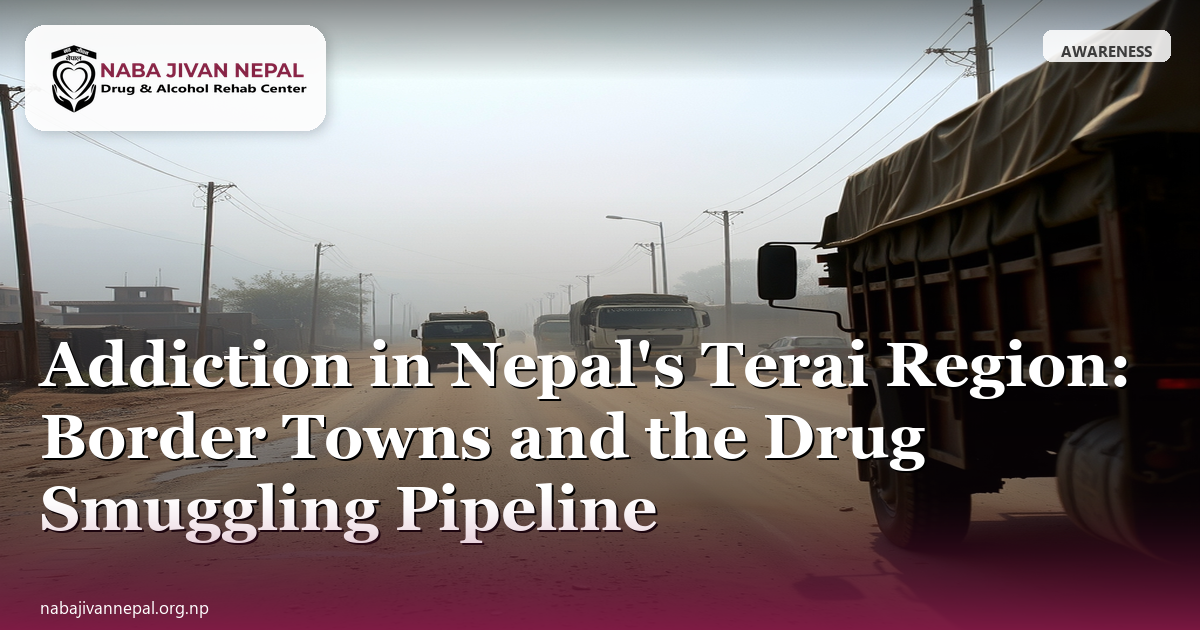
<> Addiction in Nepal’s Terai Region: Border Towns and the Drug Smuggling Pipeline <>
Nepal, a country nestled in the Himalayas, has been grappling with the issue of drug abuse and addiction for years. The Terai region, which borders India, has emerged as a hotspot for drug smuggling and abuse. The porous border between Nepal and India has made it easier for drugs to flow into the country, leading to a rise in addiction cases. According to a report by the Nepal Police, the number of drug-related cases has increased by 25% in the past year alone.
The Rise of Drug Abuse in Nepal’s Terai Region
The Terai region, which accounts for about 50% of Nepal’s population, has been particularly affected by the drug abuse epidemic. The region’s proximity to the Indian border and the presence of major highways have made it an attractive route for drug smugglers. The ease of transportation and the lack of effective border control have contributed to the proliferation of drugs in the region.
According to a study by the Nepal Health Research Council, the prevalence of drug abuse in the Terai region is higher than in other parts of the country. The study found that 12.5% of the population in the Terai region had used drugs at least once in their lifetime, compared to 8.5% in other regions.
The most commonly abused drugs in the Terai region are heroin, marijuana, and opium. Heroin is particularly popular among young people, who often use it as a status symbol. The use of heroin has been linked to an increase in HIV/AIDS cases in the region, as users often share needles and engage in high-risk behaviors.
The rise of drug abuse in the Terai region has also been linked to the presence of organized crime groups. These groups, often with ties to Indian mafia, have been involved in drug smuggling and trafficking. They have also been known to use violence and intimidation to maintain their control over the drug trade.
The situation is further complicated by the lack of effective law enforcement and the corruption that plagues the region. Many police officers and government officials are either complicit in the drug trade or turn a blind eye to it, making it difficult to crack down on the smugglers.
Border Towns and the Drug Smuggling Pipeline
The border towns of Nepal, particularly those along the Indian border, have become major hubs for drug smuggling. These towns, such as Birgunj and Bhim Datta, have been identified as key entry points for drugs into the country.
The border towns are often characterized by a lack of effective border control, corruption, and a thriving black market. The smugglers take advantage of these conditions to bring in large quantities of drugs, which are then distributed to other parts of the country.
The use of technology, such as drones and mobile apps, has also made it easier for smugglers to operate. They can now use these tools to coordinate their activities, track their shipments, and communicate with their networks.
The situation is further complicated by the presence of rival gangs and the use of violence to maintain control over the drug trade. The border towns have become a hotbed of gang activity, with rival gangs often engaging in turf wars and violent clashes.
The government has launched several initiatives to crack down on the drug trade, including the establishment of a dedicated anti-narcotics unit and the deployment of additional police personnel to the border areas. However, more needs to be done to address the root causes of the problem and to provide support to those affected by addiction.
Professional Help is Available
If you or someone you know is struggling with addiction, there is help available. Naba Jivan Nepal, a drug and alcohol rehabilitation center in Pokhara, offers a range of services to support individuals struggling with addiction. Their team of experienced professionals provides counseling, therapy, and other forms of support to help individuals overcome their addiction and achieve a healthy and fulfilling life.
Contact Naba Jivan Nepal at +9779864899917 to learn more about their services and to schedule an appointment. Don’t wait until it’s too late – seek help today and take the first step towards a healthier and happier life.
Statistics on Drug Abuse in Nepal
According to a report by the Nepal Police, the number of drug-related cases has increased by 25% in the past year alone. The report also found that the majority of drug users are between the ages of 15 and 30, and that the most commonly abused drugs are heroin, marijuana, and opium.
A study by the Nepal Health Research Council found that 12.5% of the population in the Terai region had used drugs at least once in their lifetime, compared to 8.5% in other regions. The study also found that the prevalence of drug abuse is higher among young people, with 21.1% of those aged 15-24 having used drugs at least once.
The government has launched several initiatives to address the issue of drug abuse, including the establishment of a dedicated anti-narcotics unit and the deployment of additional police personnel to the border areas. However, more needs to be done to address the root causes of the problem and to provide support to those affected by addiction.
Breaking the Cycle of Addiction: Understanding the Importance of Family Support
Nepal’s Terai region is not just affected by the influx of illicit drugs, but also by the lack of support systems for those struggling with addiction. Family support is crucial in the recovery process, as it can provide a sense of belonging and motivation for individuals to overcome their addiction. However, this support system is often lacking in Nepal’s rural areas, making it difficult for individuals to access the help they need.
At Naba Jivan Nepal, we understand the importance of family support in the recovery process. Our rehabilitation center offers family counseling sessions, where family members can learn how to support their loved ones and understand the complexities of addiction. We also provide education on how to create a supportive environment at home, which can help individuals stay on the path to recovery.
Some practical tips for family members to support their loved ones include:
- Encouraging open communication and creating a safe space for discussion
- Setting clear boundaries and expectations
- Supporting their loved one’s recovery goals and plans
- Seeking professional help when needed
The Role of Community in Prevention and Recovery
Community plays a vital role in preventing and recovering from addiction. In Nepal’s Terai region, community-based initiatives can help raise awareness about the risks of addiction and provide support to those struggling with it. By working together, community members can create a safe and supportive environment that encourages individuals to seek help and maintain their recovery.
Some community-based initiatives that can help prevent and recover from addiction include:
- Creating awareness campaigns and educational programs
- Organizing community events and support groups
- Providing access to recreational activities and hobbies
- Encouraging social connections and relationships
Addressing the Root Causes of Addiction in Nepal’s Terai Region
Addressing the root causes of addiction in Nepal’s Terai region requires a comprehensive approach that involves government, civil society, and individuals. Some of the root causes of addiction in this region include:
- Poverty and unemployment
- Lack of access to education and job opportunities
- Social and cultural factors that promote substance use
- Easy access to illicit drugs along the Nepal-India border
To address these root causes, we need to work together to create a supportive environment that encourages individuals to seek help and maintain their recovery. This can be achieved through a combination of government policies, community-based initiatives, and individual actions.
Frequently Asked Questions
Q: What is the cost of treatment at Naba Jivan Nepal?
A: The cost of treatment at Naba Jivan Nepal varies depending on the type of program and services required. We offer affordable and sliding-scale fees to ensure that everyone has access to quality treatment.
Q: What is the success rate of Naba Jivan Nepal’s treatment programs?
A: Our treatment programs have a high success rate, with many individuals achieving long-term recovery and improving their overall quality of life.
Q: Do you offer detoxification services?
A: Yes, we offer detoxification services as part of our comprehensive treatment programs.
Q: Can I bring my family with me to treatment?
A: Yes, we welcome family members to join our treatment programs and offer family counseling sessions to support their loved ones.
Q: Do you offer aftercare services?
A: Yes, we offer aftercare services to support individuals in their ongoing recovery and provide them with the tools and resources they need to maintain their sobriety.
Conclusion
Addiction is a complex issue that affects individuals, families, and communities across Nepal’s Terai region. At Naba Jivan Nepal, we understand the importance of addressing the root causes of addiction and providing comprehensive treatment programs that support individuals in their recovery journey. By working together, we can create a supportive environment that encourages individuals to seek help and maintain their sobriety.
Call to Action
If you or someone you know is struggling with addiction, please don’t hesitate to reach out to us. Our team of experienced professionals is here to provide you with the support and guidance you need to overcome your addiction and achieve long-term recovery. Call Naba Jivan Nepal today at +9779864899917 for a free, confidential consultation.